APM freezes CDF amendment, orders new control guidelines

By Michael Martin//MALAWI
● Analysts say the President’s decision effectively pauses reforms
● The outcome to shape the future of local development financing-CSOs
●” CDF debate becomes a test of constitutionalism”
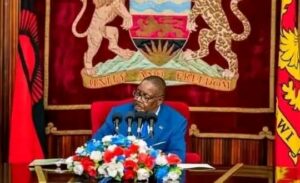
President Peter Mutharika has withheld assent to the Constitutional Amendment Bill seeking to change the management of the Constituency Development Fund (CDF), triggering renewed national debate on governance and accountability.
The decision was announced late Tuesday 6th January 2026 through a statement from State House Press Secretary Cathy Maulidi.
According to the statement, the President has directed the Ministers responsible for Justice and Constitutional Affairs and Finance and Economic Planning, to draft fresh guidelines for the administration of the CDF.
Maulidi said the move is aimed at ensuring that constituency level development continues without undermining financial integrity.
The President reaffirmed his administration’s commitment to accountability, transparencyband prudent use of public resources.
The Bill, passed by Parliament earlier this year, sought to amend the Constitution to allow Members of Parliament greater involvement in the management of CDF resources.
This followed prolonged disagreements between MPs and local councils over control of the fund.
In May 2025, the High Court of Malawi, sitting as a Constitutional Court, ruled that councils not MPs should manage the CDF.
The court also struck down provisions that gave MPs voting rights at council level as ex officio members.
Judges found that such arrangements compromised MPs’ oversight role and violated the Constitution.
Despite the ruling, Parliament pushed ahead with constitutional amendments to reintroduce MPs into CDF decision making.
The Legal Affairs Committee of Parliament recommended that legislators retain authority to approve CDF funded projects.
This recommendation was made despite strong objections from civil society and governance stakeholders.
As the President continues to scrutinise the Bill, civil society organisations have emerged sharply divided.
The Human Rights Consultative Committee (HRCC) has urged the President to assent to the Bill without further delay.
HRCC Chairperson Robert Mkwezalamba argued that postponement would slow the release of development funds to constituencies.
He said communities urgently need access to resources to address pressing local challenges.
However, the National Advocacy Platform (NAP) has described HRCC’s position as deeply problematic.
NAP Chairperson Benedicto Kondowe said endorsing the Bill in its current form undermines constitutional governance.
Kondowe also chairs the Joint Coalition opposing the proposed amendments.
Earlier, at least 12 civil society organisations formally asked the President not to sign the Bill into law.
They warned that the amendments would erode the separation of powers and weaken oversight of public funds.
In an interview, governance expert, Wonderful Mkhutche says the President’s hesitation reflects the seriousness of the constitutional issues at stake.
Mkhutche argues that any framework governing the CDF must clearly separate political influence from administrative control.
He adds that ignoring court rulings risks setting a dangerous precedent for constitutional order.
Political analyst George Chaima believes the standoff exposes deeper flaws in decentralisation system.
Chaima notes that unclear roles between MPs and councillors have fueled conflict since the CDF’s inception.
He warns that without firm rules, the fund will remain vulnerable to abuse and inefficiency.
The CDF has long been associated with allegations of mismanagement and corruption.
In several constituencies, projects funded through the CDF have stalled or been left incomplete.
The proposed allocation of K5 billion per constituency has further intensified scrutiny over how the money would be controlled.
Supporters of the Bill argue the funds are crucial for addressing micro-level development gaps.
Critics counter that larger allocations require stronger safeguards, not expanded political control.
State House maintains that the President’s directive is meant to balance development needs with fiscal discipline.
Drafting of new guidelines is expected to involve both legal and financial assessments.
It remains unclear how long the process will take or whether Parliament will revisit the Bill.
Meanwhile, constituencies continue to operate under the existing CDF framework.
About Author