FG Reforms: Opposition are misleading Nigerians, says TPI Director General, Dr. Adebayo
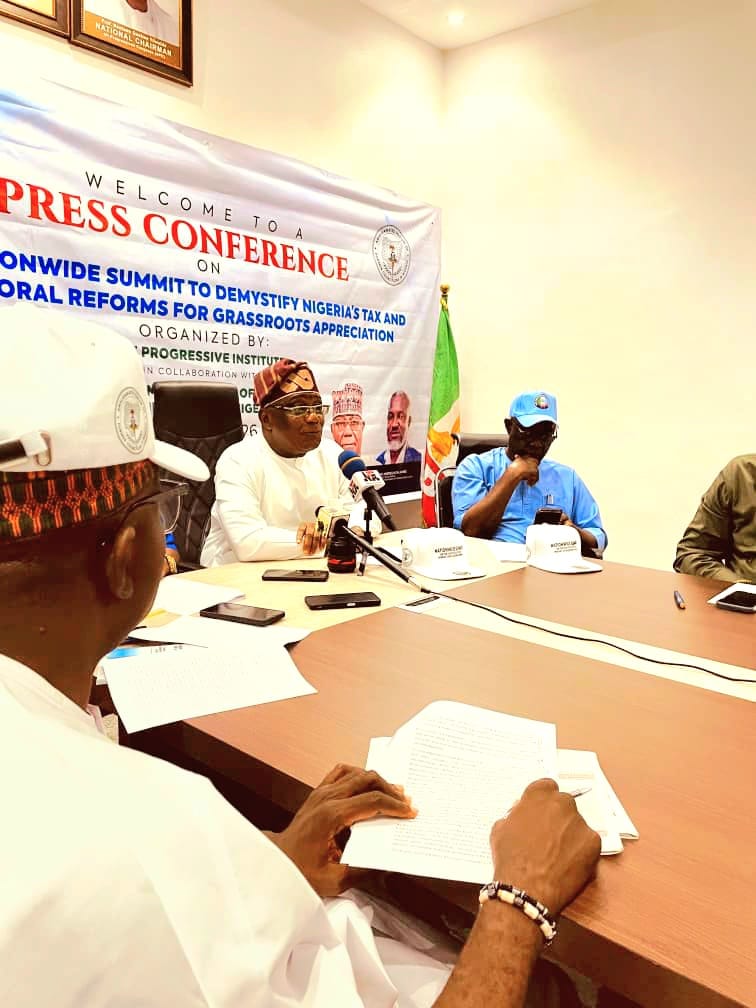
By Olawale Abideen/ABUJA// In the quest for a better understanding of the President Bola Ahmed Tinubu’s Renewed Hope Agenda, The Progressive Institute, TPI, in collaboration with the Amalgamated Forum of Former Councillors in Nigeria has embarked on national orientation project aimed at simplifying the various reforms of the government.
The APC Think Tank disclosed on Friday during a Press Conference that it is imperative to tour the six geopolitical zones in order to sensitize the grassroots on electoral and tax reforms being implemented by the Tinubu-led administration.
Dr. Lanre Adebayo, Director General, DG of TPI said the pilot summit will be held in Uyo, Akwa-Ibom State on 13th and 14th August, 2026, where all the six states of the South-South geopolitical zone will converge on for the sensitization.
Dr. Adebayo described the Summit as “a national civic enlightenment initiative conceived to promote a clearer understanding of two of the Federal Government’s most significant reform agendas—Nigeria’s tax reforms and electoral reforms.”
The DG said “On behalf of The Progressive Institute (TPI), the official Think Tank and Intellectual Resource Centre of the All Progressives Congress (APC), in collaboration with the Amalgamated Forum of Former Councillors in Nigeria (AFFCN) and other strategic stakeholders, we are pleased to formally announce the Nationwide Summit on the Demystification of Nigeria’s Tax and Electoral Reforms, with its South-South Pilot Edition.
“Following the successful implementation of the South-South Pilot Edition, the programme will be replicated across the remaining geopolitical zones to ensure that citizens at the grassroots are adequately informed, actively engaged and empowered to participate meaningfully in the national reform process.”
According to him, the Summit seeks to: Demystify Nigeria’s tax and electoral reforms through simplified, factual and citizen-friendly presentations; Promote informed public discourse while addressing misinformation and misconceptions surrounding the reforms; Build stakeholder confidence and encourage grassroots ownership of the reform agenda; Strengthen civic participation in governance and democratic processes; and foster constructive collaboration among government institutions, political actors, civil society organisations, traditional institutions and community leaders in support of sustainable national development.
The TPI Director decried the propaganda of the opposition political parties about reforms of the Tinubu-led administration, hence, the Summit in order to demystify some of the policies they had misconstrued and misrepresented to Nigerians.
“It is also important to state that in recent times, elements of the opposition and other naysayers have embarked on a sustained campaign of misinformation, deliberately distorting the provisions and intentions of these reforms to sow fear, confusion and distrust among Nigerians.
“These opposition forces have falsely portrayed the tax reforms as punitive and anti-people, whereas the reality is that these reforms are carefully designed to be pro-poor and pro-middle class, with clear provisions that protect low-income earners, reduce the tax burden on small businesses, and create a fiscal environment that encourages enterprise expansion and job creation.
The National Focal Person, Amalgamated Forum of Former Councilors in Nigeria, AFFCN, Mr. James Nkereuwem said it is now necessary as former councillors who are grassroots representatives to keep contributing our quota to the development of the country. We are indeed in a better position to sensitize the grassroots populace on policies they do not understand rather than being misled by some politicians who do not want them to know the benefits of these policies.
Nkereuwem added that the masses should rejoice that the new tax reform has lifted the burden of tax off their shoulders and has distributed it among high-network corporate organizations and individuals whose resources make it necessary for them to pay tax because they also derive these resources from the Nigerian economy.
About Author