WSCIJ LAUNCHES 2025 JOURNALISM AND CIVIC SPACE STATUS REPORT: SILENCED VOICES, SHRINKING SPACES, CIVIC FREEDOMS UNDER PRESSURE
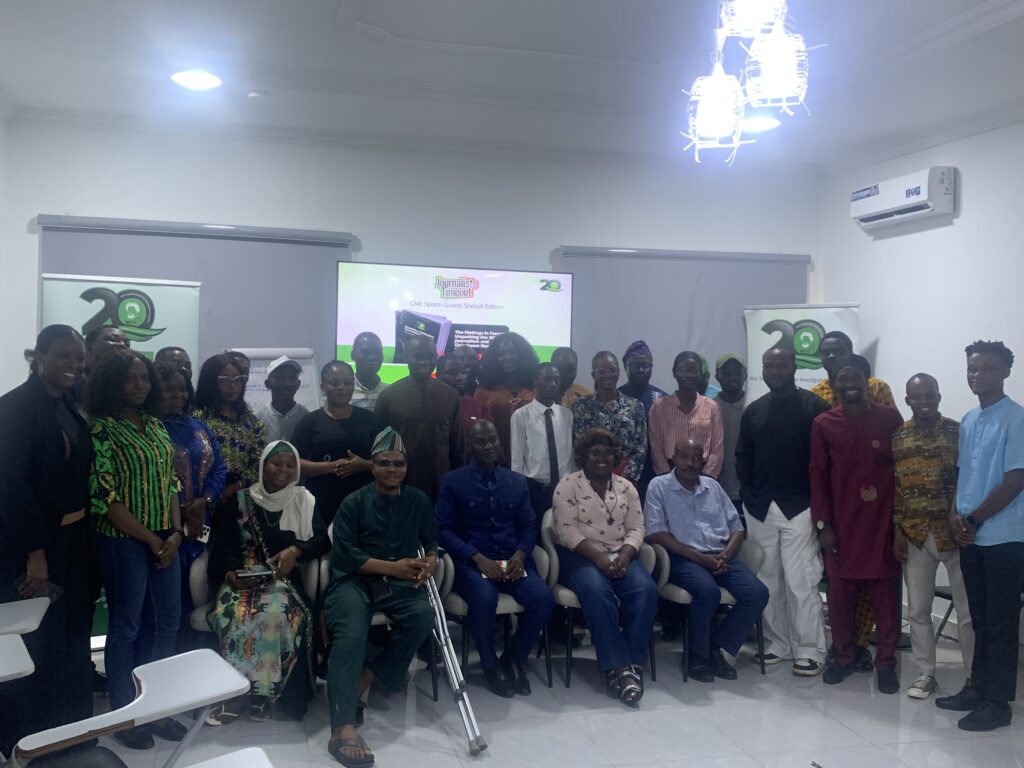
By Olayiwola Ibrahim // The Wole Soyinka Centre for Investigative Journalism WSCIJ has officially launched its 2025 Journalism and Civic Space Status Report titled SILENCED VOICES, SHRINKING SPACES: CIVIC FREEDOMS UNDER PRESSURE during the 18th Wole Soyinka Centre Media Lecture Series held in Lagos.
This is the fourth edition of the Centre’s annual, evidence-based publication.
It evaluates the state of civic space in Nigeria between January and December 2025 and highlights trends of systematic repression, institutional restrictions, and the escalating vulnerability of journalists, civil society actors, and ordinary citizens.
Despite constitutional guarantees of fundamental human rights, the report reveals a civic environment heavily constrained by institutional pushback and intimidation.
The report documented 245 verified incidents* of civic space infractions referenced across 570 media reports published by 54 media organisations.
The incidents point to widespread and recurring violations of freedom of expression, access to information, peaceful assembly, and association.
Law enforcement agencies were responsible for 89.4 per cent 219 of the 245 documented violations in 2025.
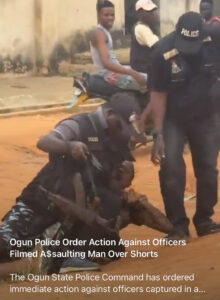
The Nigeria Police Force accounted for the highest share, implicated in 118 incidents representing 54.0 per cent of all state linked violations.
The Centre says this highlights the urgent need for greater institutional accountability and rights-based policing.
While journalists and media workers remain primary targets, the 2025 data show a sharp spike in incidents affecting ordinary citizens who accounted for 54.3 per cent 133 of all documented incidents.
Repression is now expanding beyond newsrooms to target everyday Nigerians engaging in peaceful protests, public dissent, and democratic participation.
Physical violence and intimidation accounted for 40.8% 100 incidents.
A majority, 59.2% 145 cases involved non-violent, administrative measures.
These included arbitrary arrests, detentions, legal summons, regulatory sanctions, and the misuse of legislative provisions, which often bypass public scrutiny while severely chilling free speech.
Abuja and Lagos remain heavily concentrated in terms of documented violations, driven by high levels of political activity, economic mobilisation, and media operations.
However, WSCIJ notes that low incident counts in other regions likely reflect potential underreporting and the quiet normalisation of restrictions.
WSCIJ stresses that civic space is the bedrock of any functioning democracy. Without the unhindered liberty to speak, assemble, and hold leaders accountable, Nigeria risks slipping deeper into democratic regression.
The gathering at the *Journalism and Civic Space event also contributed significantly to the conversation. Different journalists shared their ideas, thoughts, and lived experiences, showcasing possible solutions to the issues surrounding threats and barriers faced by journalists, activists, NGOs, and citizens from the government.
Discussions centred on safety protocols, legal defence networks, collaborative reporting, and strategies to counter administrative and digital repression.
Based on the findings, WSCIJ calls on key stakeholders to take immediate action:
Regulatory, Security and Law Enforcement Agencies: Undertake critical legal reforms, improve institutional oversight, and guarantee proportionate, human rights compliant responses to public assembly and dissent.
The Legislature: Review and amend ambiguous laws that criminalise online and offline expression.
The Centre also calls for *immediate action on the Cybercrimes Bill, urging that citizens must have access to freedom of expression, speech, and information.
Media and Civil Society: civic space reporting, bolster safety networks, and expand public awareness initiatives.
International Partners:* Provide technical and financial backing for local civic monitoring and early-warning protection systems.
In closing remarks, the organisers enjoined the Federal Government of Nigeria and politicians to desist from attacking journalists and vice versa.
They emphasized the need for mutual respect and dialogue as essential to protecting democratic institutions.
The report is part of efforts by WSCIJ under its Civic Space project, promoting social justice, human rights, and good governance through robust investigative journalism, capacity building, and civic engagement in Nigeria.
By utilising systematic media monitoring and incident verification, WSCIJ aims to foster dialogue, encourage institutional reforms, and strengthen advocacy efforts to protect democratic resilience and fundamental freedoms.
This publication builds upon insights from previous editions, including Hushed Voices and the Media’s Defence of Civic Space 2012-2022, Hushed Voices in an Election Year 2023, and Shrinking Freedoms 2024, to provide a deeper understanding of emerging patterns and trends.
About Author