The Vaults of Impunity: How Atiku Abubakar’s Inner Circle Flooded U.S. Banks with Millions in Suspect Offshore Wealth’ By Oto’ Drama

THE architecture of modern transnational corruption rarely relies on crude suitcases stuffed with untraceable paper currency.
Instead, it thrives within the polished marble lobbies of prestigious American financial institutions, sustained by a sophisticated ecosystem of willing legal counsel, compliant wealth managers, and systemic institutional blindness.
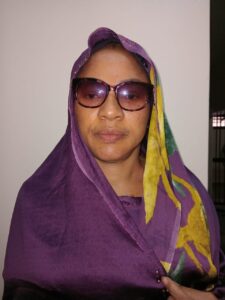
Nowhere is this dark art more vividly exposed than in the damning investigative findings chronicling the financial maneuvers of Mrs. Jennifer Douglas Atiku, wife of former Nigerian Vice President Atiku Abubakar.
While her husband occupied one of the highest offices in West Africa, Mrs. Douglas Atiku orchestrated a complex labyrinth of offshore corporations, trust funds, and secretive bank accounts designed to bypass anti-money laundering controls.
When mainstream banks like Citibank and Chevy Chase finally slammed their doors shut, her legal team simply marched her down the street to Wachovia Bank in Potomac, Maryland. There, shielded by elite institutional relationships and a cascade of astonishing compliance failures, millions in suspect funds cascaded unimpeded into the United States financial bloodstream.
*The Anatomy of a Manufactured Blind Spot*
The migration of Mrs. Douglas Atiku’s toxic accounts to Wachovia in the summer of 2007 represents a textbook study in institutional failure. By this time, Citibank had already moved to close all of its Douglas-related accounts after detecting a flood of suspicious wire transfers originating from shadowy offshore entities.
Chevy Chase Bank and Chevy Chase Trust Company had similarly signaled the exit door, citing unacceptable risk profiles and an unrecovered $400,000 personal loan that lingered unpaid for years.
Faced with financial quarantine, Mrs. Douglas Atiku deployed her chief legal architect, attorney Mr. Weidenfeld. Leveraging American University’s longstanding status as a premier client at Wachovia and his own formidable local clout, Weidenfeld initiated a charm and influence offensive targeting the bank’s Washington D.C. Wealth Management office.
In early May 2007, Weidenfeld explicitly disclosed to the head of the Wachovia DC Wealth Management office that Mrs. Douglas was married to Atiku Abubakar—who was then actively vacating the vice presidency. In a chilling indicator of how brazenly the warning signs were ignored, internal wealth manager notes from the conversation even contained a mysterious reference to “money in the freezer.”
This haunting phrase directly evoked the explosive federal criminal investigation surrounding U.S. Congressman William Jefferson, whose freezer yielded $90,000 in cash bribes, and whose sordid entanglement with Abubakar and his wife was blaring across international news headlines.
Despite these blaring red sirens, Wachovia’s leadership rolled out the red carpet. Weidenfeld followed up with a glowing recommendation letter framing Douglas as an innocent academic—a recent doctoral graduate from American University receiving an institutional fellowship—while casually brushing aside her status as the spouse of a high-ranking foreign political figure.
*A Catastrophic Cascade of Compliance Failures*
What followed was not merely an oversight, but a systemic collapse of due diligence across multiple corporate divisions within Wachovia. Standard regulatory frameworks mandate that Politically Exposed Persons (PEPs)—foreign officials and their close associates—be subjected to rigorous enhanced scrutiny to prevent the laundering of public corruption proceeds. Yet, Douglas systematically slipped through every administrative net.
When the wealth manager’s assistant entered Douglas into Wachovia’s record-keeping system, the PEP profile field was deliberately checked as “none of the above,” while her risk assessment was downgraded to a docile “Medium Priority” rather than the mandatory “High Risk.”
While internal blame later devolved into a comical blame-shifting exercise between the wealth manager and his assistant—with the former claiming he gave explicit verbal warnings and the latter claiming total amnesia—the institutional reality remained unchanged: the guardrails had been deliberately neutralized.
External vendors fared no better. Wachovia’s third-party due diligence contractor, CDC, screened Douglas against the Factiva database but miraculously failed to flag her as a PEP. CDC’s defense to congressional investigators defied credibility: they claimed individuals were only flagged as PEPs if they were the primary focus of a news article, rather than merely mentioned in connection with international bribery and corruption scandals.
Furthermore, CDC failed to conduct even a basic negative press search, completely missing the explosive investigative reports linking Douglas to the Jefferson bribery saga.
When Mrs. Douglas Atiku subsequently branched out to open accounts through Wachovia’s General Bank Group and Wealth Management divisions, the pattern repeated.
Completing personal checking account forms, she casually described her employment status as a “housewife,” masking the multi-million-dollar transnational capital flows she was about to unleash. Another third-party screener, Bridger Insight, screened her against official FBI, CIA, and Interpol watchlists but omitted foreign officials’ family members entirely, ensuring her accounts remained blissfully free of enhanced monitoring.
*The Floodgates Open: Millions in Suspect Offshore Capital*
With her accounts sanitized and rubber-stamped, Mrs. Douglas Atiku wasted no time weaponizing Wachovia’s institutional negligence. Over a destructive seven-month window from July 2007 to February 2008, she pumped $4.2 million in highly suspicious funds into the United States from the exact same offshore shell corporations that had triggered her expulsion from Citibank.
The paper trail reads like a masterclass in offshore obfuscation. The Guernsey Trust Company wire-transferred a staggering $2.4 million directly into Douglas’s personal checking account at Wachovia!
LetsGo, another opaque offshore entity, channeled $1.8 million straight into an account opened under the banner of the American University of Nigeria (AUN).
Additional layers of funding trickled in through cashiers’ checks siphoned directly out of her dying Citibank accounts, including allocations for the Gede Foundation—a philanthropic facade allegedly maintaining multi-million-dollar asset estimates sourced from corporate grants and tax-deductible individual donations.
For seven months, the money poured in while compliance officers looked the other way. It was only after sustained internal alarm bells finally pierced the administrative fog—recognizing the undeniable stench of suspicious transactions and illicit provenance—that Wachovia finally moved to shutter the accounts.
By then, the damage was complete, and millions in questionable foreign capital had successfully infiltrated the American financial architecture.
*The Mechanics of Concealment: Trusts, Trustees, and Tangled Trails*
Beyond the checking accounts and wire transfers, the machinery of concealment extended deep into asset trusts and corporate layering. Six months following the initial turbulence, in May of 2008, Lynx Investment Services in Washington D.C. agreed to serve as a trustee of the JDA Family Trust. By June 2008, this trust was quietly transferred over to Fidelity Investments.
Yet, revelations brought before the congressional subcommittee exposed a glaring trail of unfulfilled obligations: Chevy Chase Bank officials disclosed that at the exact time of the transfer, a $400,000 personal loan extended four years prior in 2004 remained entirely uncollected and unpaid.
This lingering, stagnant debt—nestled within a portfolio featuring millions in shifting trust assets—underscores the casual impunity with which financial boundaries were blurred. Trusts were treated not as legitimate wealth-management vehicles, but as revolving doors for elite capital preservation, insulated by legal counsel who managed relations across multiple competing institutions simultaneously.
*The Enduring Legacy of Transnational Corruption*
The Wachovia-Douglas scandal stands as a towering monument to the systemic vulnerabilities that allow global kleptocrats to launder their reputations and their fortunes in Western safe havens. It demonstrates how wealth, elite legal representation, and institutional complacency can systematically override statutory safeguards designed to protect the international financial system from pillaged state funds.
Atiku Abubakar’s global financial footprint, as laid bare by these congressional inquiries, reveals a chilling blueprint: exploit foreign office, channel capital through offshore conduits, deploy high-priced attorneys to lobby domestic bankers, and rely on corporate compliance failures to launder the proceeds.
While Wachovia ultimately disciplined individual managers and forced policy overhauls on vendors like CDC, the broader reality remains uncomfortably clear.
Until Western financial institutions treat the spouses and associates of foreign potentates with the unyielding scrutiny they demand, the global machinery of corruption will continue to find willing accomplices inside the heart of the Free World.
Dr. Drama contributed this piece via: Nigeriandrama@gmail.com
About Author