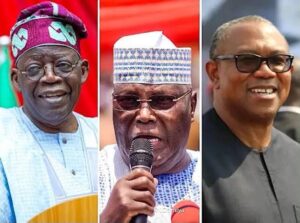
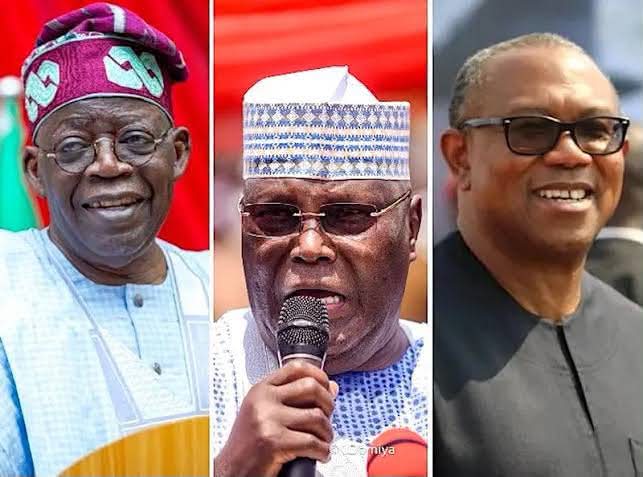
Nigeria’s 2027 presidential contest may revolve around three leading contenders, but the decisive question is whether any of them can build a coalition broad enough to translate regional strength into national victory.
With hundreds of ethnic nationalities and diverse political constituencies, Nigeria’s electoral landscape extends far beyond its three largest ethnic groups. The lessons of 1979, 1983 and 2023 demonstrate that dominance within traditional strongholds does not automatically guarantee victory at the national level. Winning requires coalition building, strategic alliances and the ability to earn support across regional, ethnic and political boundaries.
This is where the Kwararafa/Middle Belt and Niger Delta corridors become strategically important.
From Kogi, Benue, Plateau, Nasarawa, Kwara and Niger to Adamawa, Taraba, Southern Kaduna and the FCT, and across Edo, Delta, Bayelsa, Rivers, Akwa Ibom and Cross River, these constituencies represent a diverse range of communities and ethnic nationalities with significant electoral numbers needing harnessing.
They are not a uniform voting bloc, nor should their differences be ignored. Their political priorities vary, but shared concerns around security, infrastructure, economic opportunity, political inclusion and equitable representation provide a foundation for meaningful coalition building.
The real question is how these diverse interests can be organised into a coherent negotiating force capable of securing tangible political commitments.
THE NEGOTIATING TABLE MUST NOT BE APPROACHED BLINDLY
The task before these constituencies is not simply to decide which of the three contenders makes the most attractive promises. It is to determine which contender offers the strongest basis for a mutually beneficial and sustainable political partnership.
Who has demonstrated an ability to build relationships beyond immediate political convenience? Who is willing to accommodate diverse interests and translate agreements into measurable outcomes? Who understands that political partnerships require patience, mutual respect and a willingness to honour commitments?
These questions deserve careful consideration.
Political support is an asset, and its value depends largely on how strategically it is deployed. Constituencies that approach negotiations with clearly defined priorities, a common understanding of their interests and realistic expectations are better positioned to influence the outcome than those that offer support without securing meaningful commitments.
The objective is not to impose a uniform political choice on communities with different aspirations. It is to ensure that any contender seeking their support recognises their electoral value and is prepared to engage them as partners rather than take their loyalty for granted.
The strongest bargaining position is not necessarily held by those who make the loudest declarations, but by those who understand what they bring to the table, what they seek in return and when to commit their support.
THE ROAD TO VICTORY: BEYOND RALLIES AND CROWD MOBILISATION
As 2027 approaches, the decisive advantage may belong to the campaign that chooses to do things differently. Political rallies and impressive crowds create visibility, but they do not automatically translate into votes. The real leverage lies in deeper grassroots engagement, understanding local interests, building trust with community stakeholders and developing relationships that endure beyond election day.
The winning campaign will be the one that goes ward by ward, engages constituency leaders, listens to communities and translates political promises into credible commitments. In a diverse electoral landscape, a deliberate, inclusive and well organised grassroots strategy could prove more valuable than the spectacle of conventional political mobilisation.
Ultimately, rallies create excitement, relationships build trust, and organised grassroots engagement converts political goodwill into electoral strength. The campaign that understands this distinction and acts on it may well secure the leverage needed for victory in 2027.
Chief Edward David Onoja is a chieftain of APC and former Deputy Governor of Kogi State
About Author