The Wakili Returns: Can Salihu Girei Translate Bureaucratic Blueprint into Political Capital in Adamawa? By Adagher Tersoo
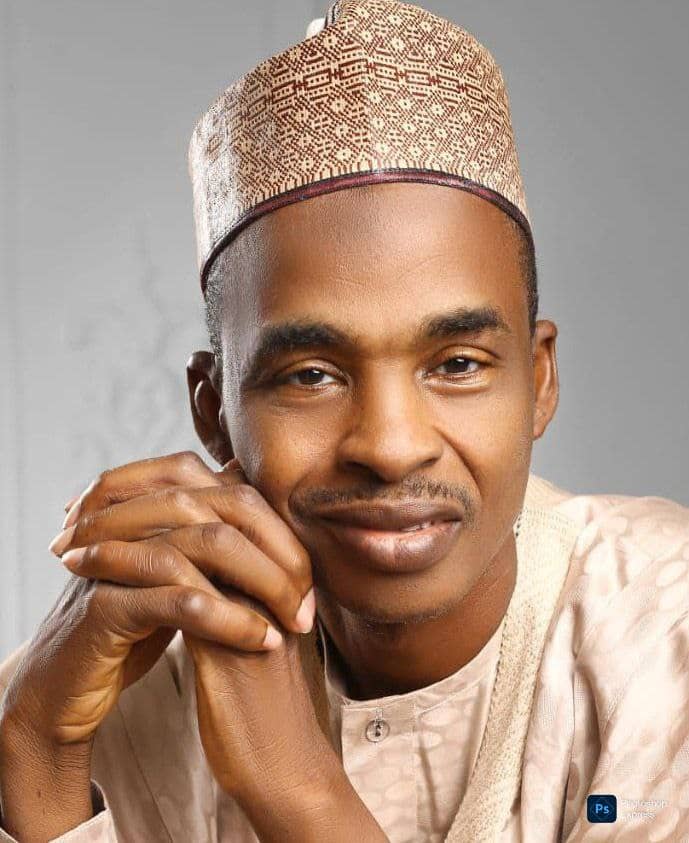
In the intricate tapestry of Adamawa State politics, where lineage, legacy, and local government loyalties intertwine, a familiar figure is quietly re-emerging from the corridors of federal bureaucracy. Dr. Salihu Bakari Girei, recently crowned with the traditional title of Wakili Makaranta (Representative of Education) by the Lamido of Fombina, is being positioned as more than just a potential candidate; he is being framed as a political project.
The recent endorsement by the Nigeria Indigenous Languages Development Council (NILDC) in Yola is the latest, and most public, call for Dr. Girei to throw his hat into the ring for the 2027 gubernatorial race. But beneath the veneer of a civic endorsement lies a deeper, more complex political narrative: the attempt to resurrect the technocratic and political legacy of the Nyako era and mold it into a vehicle for the future.
Dr. Girei is not a newcomer to the levers of power in Adamawa, though his path has been unconventional. Before his current role as a Director at the Tertiary Education Trust Fund (TETFund) in Abuja, he was the intellectual engine room of the administration of his father-in-law, Vice Admiral Murtala Hammanyero Nyako (retd.), a man still revered in political discourse as the state’s most popular governor.
From 2008 to 2014, as Governor Nyako sought to govern Adamawa’s diverse landscape, he established a “think-tank” unit—the Special Programmes Unit—and placed Dr. Girei at its helm. This was no mere bureaucratic office. It was the epicenter of the Nyako administration’s most impactful policies, a direct channel to the grassroots that bypassed traditional government bottlenecks.
Under Girei’s direction, the unit did more than draft memos. It conceptualized and implemented a sweeping skills acquisition program across all 21 local government areas. Thousands of unemployed youths were not just trained in trades like welding, tailoring, and auto mechanics; they were attached to master craftsmen for mentorship and placed on monthly stipends. It was a holistic model of empowerment that created a tangible link between the government in Yola and the unemployed youth in Michika or Numan.
This success propelled Dr. Girei through a series of high-stakes roles: Executive Chairman of the Adamawa State Universal Basic Education Board (AD-SUPEB), Commissioner for Local Government, and finally, Commissioner for Education. In these roles, he translated the pilot programs of the think-tank into policy. His tenure at SUBEB is marked by concrete, verifiable achievements—the establishment of 51 model primary schools, the distribution of free uniforms to encourage girls’ enrollment, and the construction of over 4,000 classrooms across the state. These are the bricks-and-mortar credentials the NILDC now cites as proof of his capacity.
Yet, Dr. Girei’s value to the Nyako administration was not limited to policy. He proved to be an astute political strategist, twice managing the operations room for Governor Nyako’s re-election campaigns. This placed him at the nerve center of the state’s political machinery, mapping voter turnout, analyzing polling unit data, and coordinating the grassroots networks his policies had helped cultivate.
By 2015, his influence had grown to the point where he was widely tipped as a potential successor to his father-in-law. Crucially, he reportedly enjoyed the backing of the Association of Local Governments of Nigeria (ALGON) chairmen from all 21 LGAs—a formidable political asset representing the very grassroots infrastructure he had helped build. The succession, however, never materialized as political tides shifted, and Dr. Girei eventually returned to the federal civil service, his political ambitions seemingly shelved.
The political calculus for 2027, however, is different. A recent Supreme Court ruling affirming the right of civil servants to participate in partisan politics as part of their freedom of association has altered the playing field. It is within this new legal context that Dr. Girei has been testing the waters, recently participating in a political event in Numan with members of the state executive of his party.
This has energized a bloc of stakeholders who see in Dr. Girei a unique synthesis: the administrative competence of a federal director, married to the political DNA of the Nyako era, and burnished by a track record of visible, grassroots development.
“He is a great achiever, an educationist, and an administrator with vast knowledge and experience,” said Elder Joshua Napa, NILDC Chairman, during the endorsement. The council’s argument is simple: Dr. Girei has the bureaucratic heft to build upon the achievements of the outgoing administration of Governor Ahmadu Umaru Fintiri, ensuring continuity and consolidation rather than a disruptive restart.
However, the path to the Government House in Yola is fraught with political landmines. The first is the “in-law” factor. While his relationship to Admiral Nyako is his greatest political asset, providing him with an established structure and a ready-made base, it could also be a liability. He must prove he is his own man and not simply a placeholder for a former governor’s return to influence. The political landscape has shifted significantly since 2014, with new voting blocs and emerging leaders.
Second, he must navigate the internal politics of his chosen party. Endorsements from civil society groups like NILDC are valuable for building a narrative, but they do not translate directly into delegates’ votes during a primary. He will need to deploy the strategic acumen he honed in the “operations room” to outmaneuver other aspirants who have remained visibly active in state politics over the last decade.
Finally, Dr. Girei must articulate a vision for Adamawa that resonates beyond the legacy of the Nyako years. The youths he once empowered through stipends are now a decade older. A new generation of unemployed graduates has emerged, facing different economic realities. Can the Wakili Makaranta craft a 21st-century blueprint for education and economic opportunity that speaks to them?
Dr. Salihu Bakari Girei stands at a crossroads. He is a technocrat with a political pedigree, a bureaucrat with a blueprint for governance. The call from the NILDC has thrown his hat into the ring, but whether he can transform this civic draft into a political mandate will depend on his ability to translate his past achievements into a compelling vision for Adamawa’s future—and to prove that the strategist is as sharp as the administrator. The 2027 race in Adamawa has just found a fascinating new variable.
Adagher Tersoo, A Public Affairs Analyst writes from Abuja.
About Author