When Nigeria was placed on the Financial Action Task Force (FATF) grey list in 2023, the news sent shockwaves through the global financial community. Banks became wary of Nigerian transactions, foreign investors hesitated, and the country’s reputation took a severe blow. The grey list designation—a diplomatic signal of strategic deficiencies in anti-money laundering and counter-terrorism financing controls—threatened to undo years of economic progress.
Few believed Nigeria could reverse its fortunes quickly. But in a little over two years, the story changed dramatically.
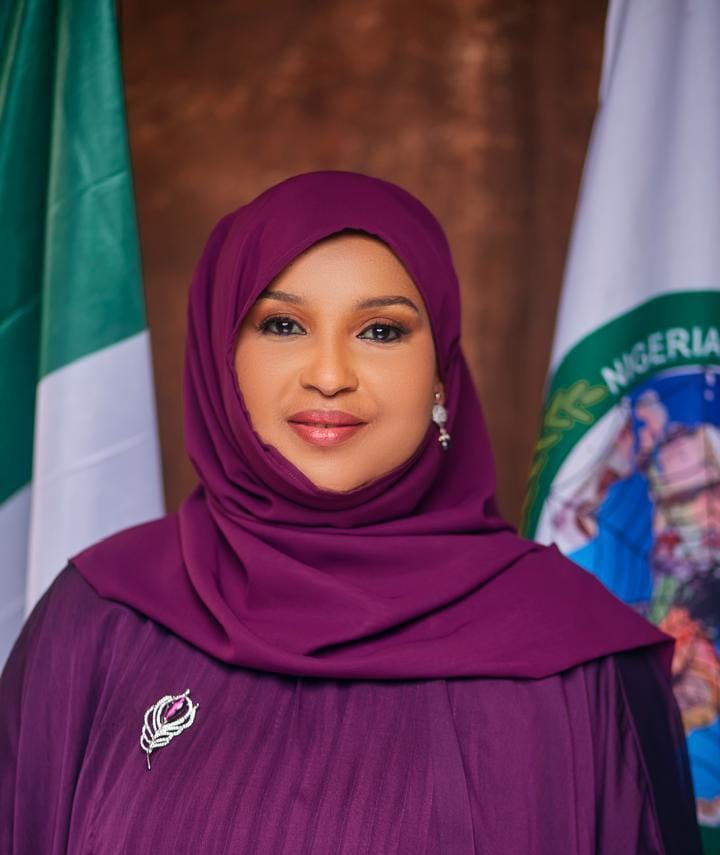
On October 24, 2025, Nigeria officially exited the FATF grey list, reclaiming its place among compliant nations and reigniting investor confidence. At the pivotal of this quiet turnaround stands Hafsat Abubakar Bakari, the Director and Chief Executive Officer of the Nigerian Financial Intelligence Unit (NFIU)—a leader whose methodical precision and institutional discipline have been instrumental in rebuilding Nigeria’s credibility on the world stage.
Bakari’s journey to the helm of the NFIU was neither sudden nor accidental. A lawyer and financial intelligence expert with years of experience in anti-money laundering, counter-terrorism financing, and counter-proliferation financing, she rose through the ranks with quiet determination.
Before her appointment as CEO, it was her tenure at the Economic and Financial Crimes Commission (EFCC) that truly shaped her leadership philosophy. At the EFCC, she held several key positions: Head of the General Services Unit, Head of the Strategy and Reorientation Unit, and Head of the Board Secretariat . These roles equipped her with an intimate understanding of Nigeria’s financial crime landscape and the institutional discipline required to tackle it.
When President Bola Ahmed Tinubu appointed Bakari as NFIU Director in February 2024, pending Senate confirmation, the decision was met with widespread approval. The Arewa Youth Forum described her as “the right person for the job” and “a daughter of the soil who has risen through the rank and file of the agency” . The president himself anticipated that she would bring her “wealth of experience and expertise to full discharge” in the administration’s war against illicit financial flows.
Leadership Without Fanfare
What distinguishes Bakari from many public officials is her aversion to grandstanding. Since assuming office, she has focused less on speeches and more on systems strengthening the NFIU’s operational architecture, deepening inter-agency collaboration, and ensuring Nigeria’s compliance framework meets rigorous international standards.
Colleagues describe her as deliberate, organised, and quietly relentless—the kind of leader who prefers results to rhetoric. This understated approach has proven remarkably effective.
Under her watch, the NFIU led a coordinated response to FATF’s 30-item action plan. Working alongside the Central Bank of Nigeria (CBN), Securities and Exchange Commission (SEC), Corporate Affairs Commission (CAC), EFCC, and the Independent Corrupt Practices and Other Related Offences Commission (ICPC), the agency closed regulatory gaps, enhanced risk assessments, and improved financial intelligence sharing.
The results were tangible. By August 2024, the NFIU had already made significant strides in blocking revenue leakages, increasing government revenues, and improving Nigeria’s international image. The agency’s Crime Record Information System (CRIMS) played a crucial role in minimizing money laundering activities, boosting government revenue at both federal and sub-national levels
Restoring Global Confidence
The climax of Bakari’s early tenure came at the FATF plenary in Paris, where the organisation’s President, Elisa de Anda Madrazo, publicly commended Nigeria for demonstrating “strong political commitment and visible improvements in transparency, enforcement, and beneficial ownership reporting” . She credited the country’s inter-agency coordination and government-wide reforms as key factors behind the delisting.
For Bakari, the achievement was collective. “Our removal from the FATF grey list reflects Nigeria’s commitment to transparency, accountability, and the rule of law in financial transactions,” she said after the announcement. “It is a collective victory for the country’s financial system and for all agencies that worked tirelessly to achieve it”.
Yet she was quick to credit the political backing that made reform possible. “The Presidency’s support was instrumental in completing the FATF Action Plan and aligning Nigeria with international standards,” she acknowledged. The presence of three Nigerian ministers—Justice Minister Lateef Fagbemi, Finance Minister Wale Edun, and Interior Minister Olubunmi Ojo—at the FATF plenary underscored the administration’s commitment.
The economic significance of Nigeria’s return to the FATF white list extends far beyond regulatory compliance. International banks and investors can now engage Nigerian institutions with fewer compliance barriers, reducing transaction costs and improving cross-border flows. For President Tinubu’s economic team—which is pursuing ambitious fiscal and monetary reforms, including the unification of exchange rates and efforts to stabilise the naira—the FATF endorsement could not have come at a better time.
The benefits are also reaching Nigeria’s digital economy. With stronger anti-money laundering and counter-terrorism financing compliance, fintech firms and digital payment operators can access global markets with fewer restrictions. Venture capital inflows and cross-border partnerships are expected to grow, reinforcing Nigeria’s status as Africa’s fintech hub.
Perhaps the most remarkable aspect of Bakari’s leadership is her refusal to rest on laurels. Even as international praise poured in, she remained focused on the work ahead. “Our focus now is on sustainability, ensuring that the systems we have built remain effective and that Nigeria never returns to the grey list,” she said .
To that end, the NFIU has been investing in advanced analytics, expanding its data-sharing networks, and fostering stronger ties with global partners such as the Inter-Governmental Action Group against Money Laundering in West Africa (GIABA) . Bakari has also prioritised capacity building, organising workshops for Anti-Money Laundering and Counter-Financing of Terrorism.
Her hands-on approach to reform reflects a broader vision: building durable systems rather than temporary fixes. This philosophy was evident in her leadership during the NFIU’s strategic partnership with the Oil and Gas Free Zones Authority (OGFZA) in August 2024. The collaboration aimed to enhance transparency and compliance within Nigeria’s oil and gas free zones, preventing their exploitation for illicit financial activities.
“The partnership is expected to lead to the development of new regulatory guidelines that will further safeguard the integrity of financial transactions,” OGFZA’s Managing Director, Bamanga Usman Jada, noted after a meeting with Bakari. He praised her for elevating the NFIU’s status within the global financial intelligence community.
Bakari’s vision extends far beyond the grey list exit. In January 2026, she officially launched Nigeria’s strategic blueprint for the pivotal 2027 FATF mutual evaluation—a comprehensive assessment that will be more demanding than any before it, conducted under a revised FATF methodology that prioritises “tangible effectiveness and demonstrable outcomes” over the mere existence of laws and policies.
“We must demonstrate effectiveness, not intentions,” Bakari stressed at the launch. “Financial intelligence must lead to credible investigations, prosecutions, and convictions” .
The roadmap she unveiled provides a clear, actionable national plan that includes critical legal reforms and operational changes designed to produce demonstrable increases in the use of financial intelligence. It also establishes cross-governmental working groups tasked with a “call to national duty,” complete with strict timelines and mandates for proactive problem-solving.
Central to this strategy is the intrinsic link between the roadmap and Nigeria’s 2026 National Risk Assessment (NRA). The two initiatives will “move in absolute tandem,” ensuring all actions are directly informed by a contemporary, evidence-based analysis of the country’s unique money laundering and terrorist financing threats.
Success, according to Bakari, will be measured “not by speeches or meetings, but by the discipline of execution, the honesty of our self-assessment and the rigour of our collaboration”.
In an era where public leadership is often measured by volume and visibility, Hafsat Bakari stands as a refreshing counter example. She does not command attention with grand pronouncements or political posturing. Instead, she works behind the scenes, methodically building systems that endure.
Her rise from a dedicated EFCC officer to the head of Nigeria’s top financial intelligence agency mirrors the country’s own journey—from vulnerability to credibility. Through discipline, collaboration, and an unyielding commitment to integrity, she has done more than reform an institution; she has helped rebuild Nigeria’s standing in the eyes of the world.
As one analyst put it, “Whoever advised President Bola Ahmed Tinubu to appoint Hafsat Bakari as the Director/CEO of NFIU has offered one of the most patriotic and generational services to our nation
About Author