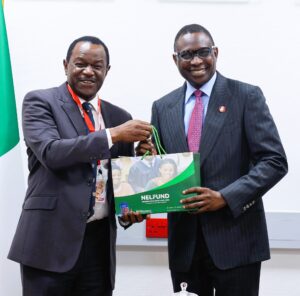
We Must Recalibrate Our Educational System to Align With Global Best Practices, -TETFUND Boss

By Morris Nor// The Executive Secretary of the Tertiary Education Trust Fund (TETFund), Sonny Echono, has called for a comprehensive overhaul of Nigeria’s education system as well as increased funding to the sector to better prepare graduates for the contemporary workforce and address rising youth unemployment in the country.
Speaking at the 13th convocation lecture of Nile University in Abuja on Tuesday, Echono stressed that reforms must align curricula, teaching, and institutional priorities with 21st-century economic realities.
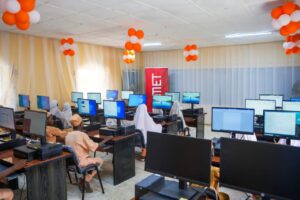
He acknowledged that the Federal Government has initiated several education-focused reforms, including the expansion of infrastructure and digital learning, and the training of educators in ICT to enhance quality and access to education.
According to him, the various initiatives and reforms being rolled out in the education sector, coupled with the growing influence of EdTech startups, hold great promise for transforming Nigeria’s educational landscape.
Echono noted, however, that the successful implementation of these reforms would require adequate funding, sustained political commitment, and effective partnerships between the public and private sectors.
“For educational reforms to be sustained, the Nigerian government needs to increase its investment in education significantly.
“The increase in funding should not only target the construction of new educational institutions but also the rehabilitation of existing ones, the provision of facilities and teaching materials, and the expansion of teacher training programs.
“Increased funding for the education sector will also facilitate improvements in the remuneration and welfare of teachers, academics, and other players in the sector to curtail brain drain and enhance the attractiveness of the sector for national development,” he stated.
Delivering the lecture, titled “Redefining the Nigerian Education System for the 21st Century Workforce,” Echono emphasised the urgent need for universities to bridge gaps between theoretical knowledge and practical skills.
While stressing that the curricula reform must align with the 21st-century workforce, he noted that the Nigerian education curriculum at all levels requires a significant overhaul to meet the needs of the global labour market.
He stated particularly that the current curricula, especially at the secondary and tertiary levels, do not reflect the job market demands of the 21st century.
Aligning Nigeria’s education curriculum with global labour market demands is crucial for preparing students for the future workforce, which is increasingly shaped by technological advancements, automation, and globalisation.
“The Nigerian curricula should integrate digital literacy, entrepreneurship education, and technical skills across all education levels. Subjects such as data science, renewable energy technologies, artificial intelligence, and financial literacy should be common in secondary and tertiary institutions.
“Education must focus on access, quality, and measurable outcomes,” Echono said. “Our graduates should acquire skills for national and individual efficiency, technological innovation, and sustainable growth.”
Echono traced Nigeria’s education evolution, noting the inadequacy of colonial-era structures post-independence, and outlined the persistent challenges that continue to hinder progress: insufficient funding, outdated curricula, irregular teacher salaries, policy inconsistency, and poor infrastructure.
He stressed that tertiary institutions must respond to societal needs through workforce-oriented programmes, skill acquisition, and research-led innovation.
He praised Nile University’s leadership for demonstrating visionary management, discipline, and integrity, describing their achievements as a benchmark for institutional development. “This milestone reflects what is possible when vision and commitment guide education,” he said.
The TETFund boss urged government and private sector collaboration to modernise education, arguing that sustainable nation-building hinges on producing employable, socially conscious graduates. “Without practical, quality education, national development goals will remain aspirational,” he added.
“A well-educated population is more likely to generate innovative ideas and solutions that address Nigeria’s unique challenges, such as infrastructure gaps, access to healthcare, unemployment, poverty, and sustainable development,” he added.
About Author