Country’s economy to grow by 4.6 percent–Mwanamvekha
By Michael Martin//MALAWI
● Mwanamvekha maintains that the budget to focus on stabilisation and investment in key sectors
● Focus on realistic assumptions and policy consistency–MCCCI
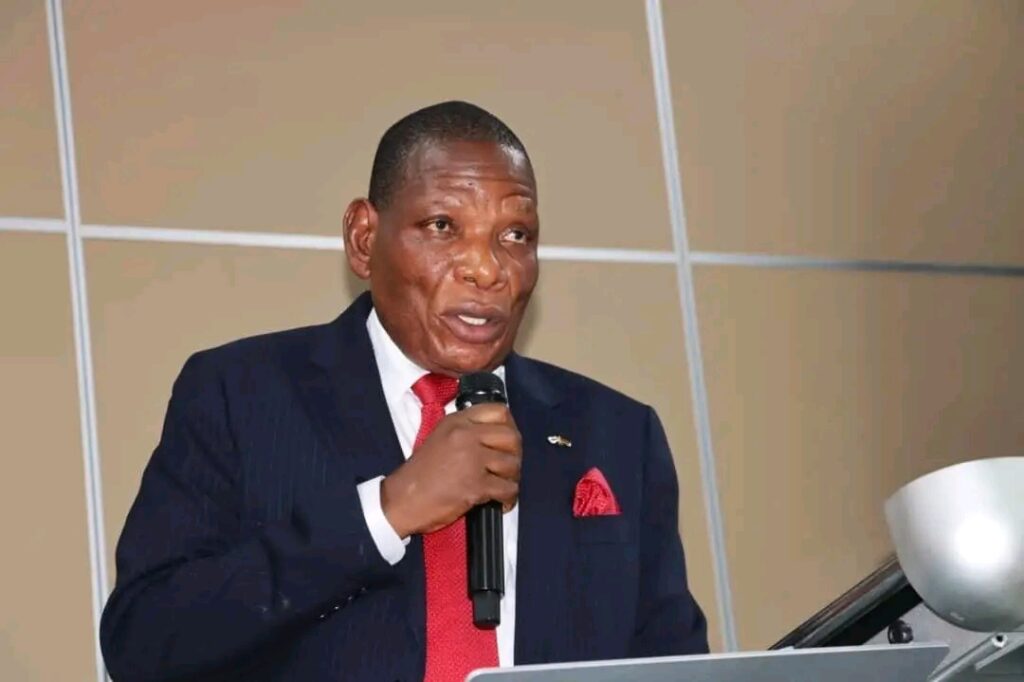
Economy in the country is projected to grow by 4.6 percent this year, Minister of Finance and Economic Planning Joseph Mwanamvekha has said by expressing optimism that declining inflation and targeted investments will support recovery.
Mwanamvekha made the projection during the final session of the 2026/27 pre budget consultation meetings held on 14th January 2026 at Mount Soche Hotel in the commercial city of Blantyre where he engaged stakeholders ahead of the national budget presentation expected next month.
He said growth is expected to strengthen further in 2027 as macroeconomic stabilisation measures begin to take effect.
According to Mwanamvekha, government’s confidence is anchored in anticipated improvements in inflation trends and increased investment in productive sectors of the economy.
“The medium term looks bright; we can see light at the end of the tunnel,” he told delegates.
He added that authorities are closely monitoring developments on the ground.
Again, the minister said inflation is expected to decline, arguing that government has technical capacity and policy tools to manage prevailing economic pressures.
Mwanamvekha reiterated that the 2026/27 National Budget will prioritise economic stabilisation while laying a foundation for sustainable growth.
He said government would continue making tough fiscal and policy decisions, stressing that such measures are not driven by ill intentions but by the need to safeguard the economy.
The minister also hinted at plans to implement a haircut on dollar denominated government loans as part of efforts to manage public debt.
He explained that a haircut would involve creditors accepting less than the full value of what is owed and easing government’s debt servicing burden.
Mwanamvekha said the process would be handled carefully to ensure that no stakeholder suffers undue losses.
“Some investors already expect a haircut, so we will do it in a structured manner,” he said.
On exchange rate policy, Mwanamvekha acknowledged that the devaluation of the kwacha has had mixed outcomes for the economy.
He said following the devaluations of 25 percent in 2022 and 44 percent in 2023, import bill rose sharply to about $3 billion in Malawi while export earnings remained around $1 billion.
The minister said the widening trade imbalance has contributed to rising inflation and higher interest costs on government borrowing.
He added that while currency adjustment remains a recognised policy tool, Malawi must explore alternative approaches that minimise pain on citizens.
Mwanamvekha also warned individuals involved in illegal foreign exchange trading and money laundering to desist, saying enforcement agencies are actively tracking such activities.
He said restoring discipline in the foreign exchange market is critical to stabilising prices and rebuilding confidence.
In her remarks, Chief Executive Officer for the Malawi Confederation of Chambers of Commerce and Industry (MCCCI), Daisy Kambalame has welcomed government’s growth ambitions but cautioned against policies that could undermine private sector investment.
Kambalame urged Treasury to review the proposal to reduce the supernormal profit threshold from K10 billion to K5 billion.
Kambalame said setting K5 billion as supernormal profit could discourage investors and portray Malawi as an uncompetitive investment destination.
“A steep tax rate reduces the capacity of firms to reinvest and grow,” she said.
She added that reinvestment is critical for expanding productive capacity, creating jobs and supporting economic growth.
Kambalame also called on government to prioritise manufacturing growth as a driver of industrialisation.
She recommended reviewing the 20 percent sewer charges imposed on bottling companies, citing their impact on production costs.
She further urged the removal of import duties on essential spare parts to ease operational challenges faced by manufacturers.
According to Kambalame, supportive fiscal policies would strengthen local industries and reduce reliance on imports.
The Institute of Chartered Accountants in Malawi (ICAM) focused its submissions on tax equity and household welfare.
ICAM president Daniel Jere proposed raising the tax free threshold to K250,000 from the current K170,000.
He said the move would cushion low income earners whose purchasing power has been eroded by high inflation.
Jere argued that failure to adjust thresholds in line with inflation amounts to a hidden tax on workers.
He also called for the introduction of a 20 percent tax band to improve progressivity in the tax system.
Jere further proposed reintroducing the 25 percent Pay As You Earn (PAYE) band.
At the same time, he urged government to scrap the 40 percent top marginal tax rate.
“Malawi will not tax its way into prosperity with higher taxes,” Jere said, advocating for a broader tax base instead.
University of Malawi Deputy Vice Chancellor, Sunduzwayo Madisi has said that growth projections will depend on policy consistency and macroeconomic stability.
Madisi noted that high inflation and foreign exchange shortages remain major risks to economic recovery.
He said fiscal and monetary policies must be well coordinated to avoid sending conflicting signals to the market.
According to Madisi, frequent policy shifts undermine investor confidence and slow private sector response.
He urged government to prioritise expenditure that enhances productivity rather than expanding recurrent spending.
Madisi identified energy, infrastructure and education as key sectors that can support long term growth.
He also cautioned that debt restructuring measures, including haircuts, must be communicated transparently to maintain trust.
The banking sector said macroeconomic stability will be critical in supporting credit growth.
Bankers Association of Malawi chief executive Lyness Nkhungula said high inflation and interest rates continue to constrain lending to businesses.
She said banks are willing to finance productive sectors but elevated risks make lending expensive.
Nkhungula urged government to accelerate reforms aimed at stabilising prices and improving foreign exchange availability.
She said a stable environment would lower borrowing costs and unlock private sector investment.
The association also called for closer coordination between fiscal and monetary authorities.
Overall, the pre budget consultations revealed broad agreement on the need to balance revenue mobilisation with economic growth.
Stakeholders warned that excessive taxation could slow recovery and weaken competitiveness.
At the same time, government faces pressure to raise revenue amid limited fiscal space.
Participants also highlighted the social impact of inflation on households and businesses.
Economists said achieving the projected growth will require discipline in policy implementation.
In Malawi, economy has faced repeated shocks in recent years, including climate related disasters and global price volatility.
These challenges have complicated fiscal planning and heightened expectations for the 2026/27 budget.
As consultations conclude, Treasury is expected to consolidate stakeholder inputs into the final budget framework.
All eyes are now on Parliament, where the 2026/27 National Budget will test whether projected growth of 4.6 percent can be translated into tangible economic gains for Malawians.
About Author