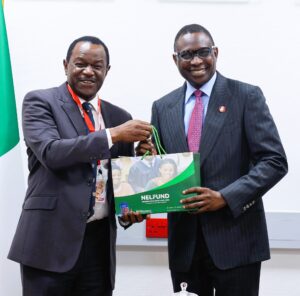
Echono and the TETFund Trajectory: How Strategic Leadership Is Rewriting Nigeria’s Tertiary Education Story By Adagher Tersoo.
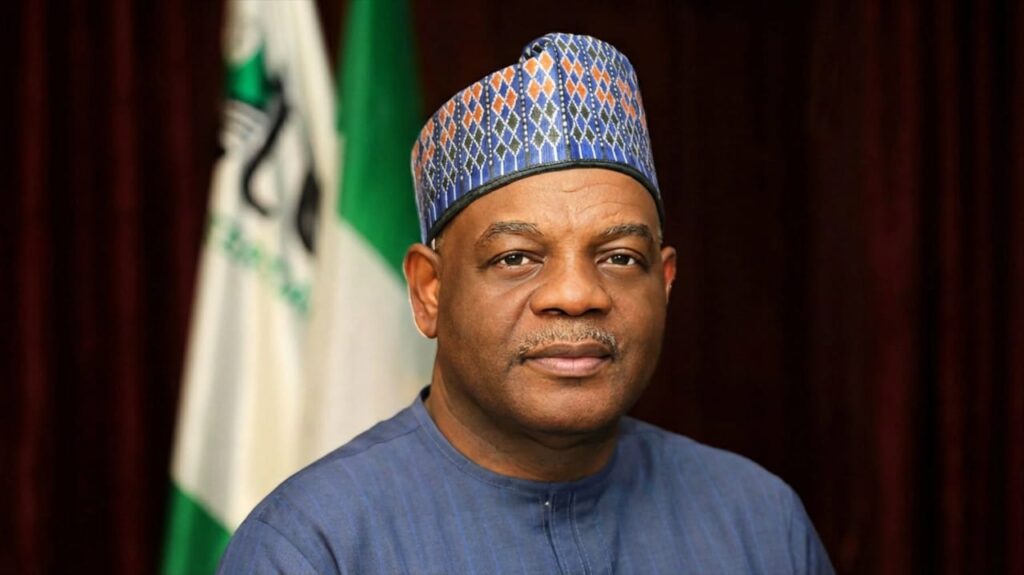
For decades, Nigeria’s tertiary education system has grappled with a familiar catalogue of challenges: inadequate infrastructure, overcrowded lecture halls, insufficient student accommodation, weak research capacity, obsolete equipment, limited digital facilities, and the persistent difficulty of translating public investment into measurable academic outcomes.
In recent years, however, a different narrative has begun to emerge. At the centre of that shift is the Tertiary Education Trust Fund (TETFund) and its Executive Secretary, Arc. Sonny Echono, whose tenure has increasingly been associated with institutional reform, infrastructure renewal, research development, innovation, and a more strategic approach to government intervention in universities, polytechnics, and colleges of education.
TETFund itself defines its mandate as providing focused and transformative interventions in Nigeria’s public tertiary institutions through funding and effective project management. Under Echono, however, the Fund has sought to move beyond the traditional perception of an agency that merely finances projects, to one that increasingly shapes the direction, quality, and competitiveness of tertiary education.
This transformation has not been without challenges. Nigeria’s economic realities, rising construction costs, exchange-rate volatility, and the vast infrastructure deficit across public institutions remain significant constraints. Nevertheless, available evidence suggests that TETFund has expanded both the scale and sophistication of its interventions under Echono’s leadership.
A recent assessment of his tenure described the Fund as having shifted towards strategic expansions, institutional strengthening, and measurable progress, with interventions spanning infrastructure, research, and academic development.
One of the defining features of Echono’s leadership has been the effort to align TETFund interventions with broader national development objectives. Rather than treating infrastructure as an end in itself, the approach increasingly links physical development with teaching, learning, research, innovation, digital access, and human capital development.
Reports on the Fund’s performance have highlighted major interventions in lecture theatres, laboratories, libraries, ICT centres, administrative buildings, and other facilities. One account of TETFund’s activities referenced thousands of physical infrastructure projects, equipment fabrication initiatives, faculty and departmental libraries, as well as completed Senate and library buildings.
This is significant because the infrastructure deficit in Nigerian tertiary institutions extends beyond physical structures. A university without functional laboratories cannot adequately train scientists. A polytechnic without modern workshops cannot effectively produce skilled technicians and engineers. A college of education without appropriate learning facilities cannot fully prepare the teachers who will shape the next generation.
Echono’s approach appears to reflect an understanding of this interdependence.
The hostel intervention: putting students at the centre. Perhaps nowhere is the human dimension of TETFund’s intervention more evident than in student accommodation.
For years, inadequate hostel capacity has compelled large numbers of students to seek off-campus housing, often at significant financial and security costs. The situation has worsened as student populations have grown faster than available accommodation.
A recent report noted that accommodation remains one of the most pressing challenges facing Nigerian tertiary students, with insufficient hostel capacity leaving many dependent on expensive or poorly maintained external housing.
TETFund’s increased focus on hostel development therefore represents more than a routine infrastructure programme. It is an intervention directly linked to student welfare, academic concentration, and campus safety.
A TETFund-sponsored 244-bed female hostel, for instance, was commissioned at a cost of approximately ₦1.4 billion, as part of the Fund’s ongoing effort to provide infrastructure that supports innovation, creativity, and academic excellence. The underlying rationale is clear: students with safe and adequate accommodation are better positioned to focus on their academic work.
It is this type of intervention that reinforces the argument that TETFund’s transformation should be assessed not only by the number of completed projects, but also by the extent to which such investments improve the lived experience of students and academic staff.
Research: moving from consumption to knowledge production
Arguably the most consequential aspect of the Echono era has been the strengthened emphasis on research and innovation.
For too long, Nigerian tertiary institutions have generated substantial academic output without consistently translating that intellectual activity into practical solutions to national challenges.
Echono has consistently placed research, innovation, and knowledge production at the core of TETFund’s intervention strategy.
The Fund has expanded support for research infrastructure, centres of excellence, academic publications, laboratories, and other platforms designed to enhance the capacity of Nigerian institutions to generate and apply knowledge. A 2026 assessment of TETFund’s activities highlighted investments in centres of excellence, manuscripts, and academic journals as part of efforts to strengthen research ecosystems.
Echono’s public engagements further underscore this priority. In June 2026, he delivered a lecture at Obafemi Awolowo University’s 65th anniversary on “Driving National Development Through Research and Innovation.” TETFund’s published materials also reflect sustained attention to research outputs, governance, and the development of multipurpose laboratories.
This represents a significant shift in orientation.
The focus is no longer solely on the volume of funding allocated to tertiary institutions, but increasingly on the quality and impact of outputs generated from that investment—technological innovation, intellectual property, scientific advancement, policy solutions, industrial applications, and skilled graduates.
Driving the Renewed Hope agenda
Echono’s tenure has also coincided with President Bola Ahmed Tinubu’s administration and its Renewed Hope Agenda, creating a strategic alignment between TETFund’s mandate and broader national education reforms. According to TETFund, the President has provided strong support for the agency’s intervention programmes, including timely approval of annual guidelines. The Fund noted that the 2026 intervention allocations were approved early enough to facilitate prompt implementation.
In 2025, Echono publicly acknowledged the President’s support, stating that TETFund had recorded significant progress despite economic pressures, and commending the timely approval of the 2026 intervention guidelines.
The relationship between policy direction and implementation capacity is critical.
While governments may articulate ambitious education policies, their success depends largely on institutions capable of translating those policies into tangible projects, programmes, and measurable outcomes.
TETFund has increasingly assumed that implementation role.
The Fund has described its interventions as aligned with the Renewed Hope Agenda, while Echono has consistently acknowledged presidential backing for education-sector investments.
In this context, the TETFund story under Echono forms part of a broader effort by the Tinubu administration to reposition education as a strategic investment in human capital rather than a recurrent expenditure item.
Alausa and the value of institutional knowledge
The relationship between TETFund and the Federal Ministry of Education has also grown in importance.
Education Minister Dr. Maruf Tunji Alausa has publicly acknowledged TETFund’s role in expanding infrastructure, strengthening research capacity, and supporting reforms aimed at improving tertiary education.
At the maiden national summit of the Education Correspondents Association of Nigeria, Alausa presented Echono with an award and commended TETFund’s contribution to the transformation of tertiary institutions.
This recognition extends beyond ceremonial value.
Echono is a career technocrat with extensive experience in public administration and education-sector management, giving him a deep understanding of the institutional framework underpinning education policy.
Such institutional knowledge is particularly valuable in translating broad policy objectives into technical guidelines, project specifications, research programmes, and institutional support mechanisms.
In a system as complex as Nigeria’s tertiary education sector, effective leadership requires more than financial approval authority. It demands a comprehensive understanding of institutional structures, academic systems, procurement processes, project delivery mechanisms, and the evolving demands of the global knowledge economy.
This depth of experience appears to be one of Echono’s key strengths.
The awards — recognition or accountability?
The growing number of awards conferred on Echono has attracted public attention.
Among the recognitions associated with his tenure are media, professional, and institutional honours. Earlier accolades include the national honour of Officer of the Order of the Niger (OON), Fellowship of the Nigerian Association for Educational Administration and Planning, the Forum for Agricultural Research in Africa’s Medal of Honour, the African Housing Awards Life Achievement Award, and an honorary fellowship from the Nigerian Institute of Building. TETFund’s publications have documented several of these recognitions.
More recently, he has continued to receive additional honours from media and stakeholder organisations.
The Vanguard Newspaper Education Icon Award recognised his contributions to tertiary education through infrastructure development, research funding, academic staff support, and policies aimed at enhancing global competitiveness.
The Education Correspondents Association of Nigeria (ECAN) also honoured him at its inaugural national summit in 2026, with the award presented by Minister Alausa.
In addition, independent assessments have been conducted on TETFund’s performance. In May 2026, the Centre for Public Accountability announced a vote of confidence in Echono following what it described as extensive monitoring and evaluation of TETFund’s nationwide interventions.
However, awards must not be viewed as substitutes for accountability, their true value lies in whether they reflect verifiable outcomes: completed projects, functional facilities, strengthened research systems, improved student accommodation, enhanced staff capacity, and institutional development.
On this basis, available reports suggest that recognition of TETFund’s work is increasingly accompanied by visible outcomes across the tertiary education landscape.
A new digital and global orientation
Another defining feature of the Echono era is the effort to position Nigerian tertiary education within a digital and globally competitive framework.
TETFund has explored international education models and developed digital platforms aimed at improving access to learning resources. The Fund has stated that its TERAS platform is designed to integrate digital libraries and expand access to academic materials for students and researchers.
This development is particularly significant in the context of modern higher education, where learning is no longer confined to physical classrooms.
Today’s students require access to global research databases, digital libraries, virtual learning environments, and technology-enabled instructional systems.
Echono’s approach reflects an understanding that modern educational infrastructure must combine both physical facilities and digital connectivity.
The bigger question: what happens after Echono? Ultimately, the true measure of public-sector reform lies in sustainability.
Individuals exit office, administrations change, and policy priorities evolve. What endures is the strength of the systems that have been institutionalised.
The most significant achievement of Echono’s stewardship may therefore not be any single project, award, or intervention, but the gradual institutionalisation of a more strategic framework for TETFund—one that integrates infrastructure, research, innovation, digital transformation, human capital development, and accountability.
Such a framework would represent a meaningful departure from a narrow project-based intervention model.
It would position TETFund not merely as a funding agency, but as a central driver of transformation within Nigeria’s tertiary education system.
Beyond the plaques
There is often a tendency to evaluate public leadership through awards and recognitions.
However, plaques do not construct laboratories, certificates do not create hostel spaces, and ceremonies do not produce research breakthroughs. The more enduring measure lies in tangible outcomes.
In TETFund’s case, the emerging record under Sonny Echono reflects a combination of infrastructure expansion, research support, student accommodation development, digital innovation, academic capacity building, and stronger alignment with national education priorities. Recent assessments have described the Fund as increasingly strategic, planning-oriented, and focused on measurable impact.
The recognition from media organisations, professional bodies, civil society groups, and education stakeholders therefore represents only one dimension of the broader narrative.
The more important story is the ongoing effort to reposition tertiary education investment as a catalyst for national development.
President Tinubu’s Renewed Hope Agenda requires institutions capable of translating policy into results. The Federal Ministry of Education requires agencies capable of efficient and targeted delivery. Tertiary institutions require infrastructure, research capacity, and modern learning systems.
TETFund operates at the intersection of these demands.
Under Echono, the Fund has increasingly sought to occupy that space with a reform-oriented agenda.
For students seeking improved accommodation, lecturers requiring enhanced research facilities, institutions in need of modern laboratories, and a nation striving to compete in a knowledge-driven global economy, the true measure of the Echono era will not be the number of awards displayed.
It will be whether the reforms leave Nigeria’s tertiary education system stronger, more competitive, more research-driven, and better prepared for the future.
That remains the central test of the TETFund transformation—and potentially, its most enduring legacy.
Adagher Tersoo, a consumate communication expert and critique writes from Abuja.
About Author