Politics of Milestone Reversal: Atiku Abubakar and the Dangerous Campaign of Playing to the Gallery’ By Prof. E. Chijioke Ogbonna
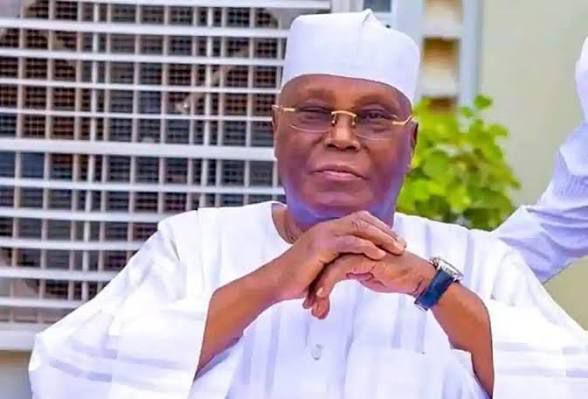
His Excellency, Alhaji Atiku Abubakar, Nigeria’s former Vice President and a presidential aspirant ahead of the 2027 general election, has recently embarked on a number of campaign outings marked by pronouncements about the policy direction his administration would supposedly take if given another opportunity to lead Nigeria.
What has become increasingly interesting, however, is the apparent tendency to frame his political proposition around the reversal of major policy milestones rather than the presentation of a more compelling and sustainable alternative development framework.
The first of such pronouncements was his suggestion that he would return Nigeria to the petrol subsidy regime.
This is where the politics of popular applause must give way to the economics and governance realities of nation-building.
President Bola Ahmed Tinubu (PBAT), upon assuming office, announced the removal of the petrol subsidy regime, a decision that was undoubtedly painful and economically disruptive in the immediate period, but one that fundamentally altered Nigeria’s fiscal architecture. The removal of subsidy has expanded the pool of resources available for public expenditure and significantly improved allocations to the three tiers of government.
Perhaps one of the most consequential outcomes has been the strengthening of fiscal federalism through increased FAAC allocations to the 36 states and 774 local government areas. This has created a historic opportunity for subnational governments to undertake deep, structured and grassroots-driven development.
The critical question, therefore, should not simply be whether Nigerians enjoyed cheaper petrol under subsidy. The more fundamental question is: what have governments at the federal, state and local levels done, or failed to do, with the expanded fiscal space created by subsidy removal?
That distinction is extremely important.
Nigeria cannot continue to address structural economic problems through policies designed primarily to sustain temporary political comfort. A serious development conversation must focus on how public resources can be redirected from inefficient consumption subsidies towards infrastructure, education, healthcare, security, productive enterprise and long-term human capital development.
Indeed, several major policy interventions and fiscal recalibrations currently shaping Nigeria’s development trajectory are connected, directly or indirectly, to the broader effort to restructure public finances. These include educational interventions, reforms in public-sector compensation, expanded access to tertiary education financing through NELFUND, increased attention to infrastructure development and a broader attempt to stabilise the fiscal foundations of the Nigerian state.
The introduction of student loans, for instance, represents an important attempt to expand educational inclusion and reduce the financial barriers confronting millions of young Nigerians seeking higher education. Similarly, the availability of increased resources to subnational governments presents states with an unprecedented opportunity to replicate and domesticate policies capable of improving education, healthcare, employment and local infrastructure.
The challenge is therefore not merely the availability of money. The challenge is governance capacity, institutional responsibility and the willingness of subnational gatekeepers to convert fiscal opportunities into measurable developmental outcomes.
This is why making a return to subsidy the centrepiece of a political campaign raises serious questions about the philosophical foundation of the proposed alternative. Leadership should not be about identifying the immediate emotional impulses of the electorate and repeating them back to the public in exchange for applause. Leadership requires the courage to distinguish between what is popular today and what is sustainable tomorrow.
A presidential campaign should offer Nigeria a superior policy architecture, not simply a catalogue of reversals.
This is where the politics of milestone reversal becomes dangerous.
If every difficult but necessary reform is to be abandoned simply because it produced short-term discomfort, Nigeria may never escape the vicious cycle of postponing structural reforms for political convenience. Transformative governance often requires difficult decisions, and the true responsibility of leadership is to manage the consequences of such decisions while ensuring that citizens ultimately benefit from the reforms.
The relationship between economic policy, human capital development and national security is particularly important in this regard.
One of the most sustainable non-kinetic approaches to insecurity is the deliberate recalibration of human capital through education, employment, productive economic opportunities and grassroots development. A society that systematically expands opportunities for its young people reduces the pool of hopelessness, exclusion and economic vulnerability upon which criminality and violent extremism often thrive.
Security, therefore, is not only about weapons, military hardware and troop deployment.
Security is also about schools, jobs, infrastructure, social mobility, economic inclusion and hope.
This is why fiscal reforms capable of expanding developmental investment must be understood within a broader national-security framework. When states and local governments receive increased resources, the expectation should be a corresponding expansion in developmental outcomes at the grassroots.
The question Nigerians should be asking their governors and local government administrators is straightforward:
With the increased fiscal allocations available to you, what measurable transformation have you delivered to the people?
President Tinubu’s administration has also pursued significant investments across critical infrastructure sectors, including aviation, road transportation, rail and other strategic areas of national development. Whether one agrees with every aspect of the administration’s policy choices or not, it is difficult to deny that the current government is attempting a fundamental restructuring of the economic and institutional foundations of the Nigerian state.
The second major pronouncement attributed to Alhaji Atiku Abubakar that he would “open the borders”, raises another important concern.
In as much as the borders are not closed as he claimed, but he should have known that Nigeria’s borders are not simply closed doors waiting for a politician to unlock them. Border management in the twenty-first century is fundamentally connected to national security, regional instability, transnational crime, terrorism, smuggling, migration and changing geopolitical dynamics within West Africa and the wider Sahel region.
The challenge is not merely whether borders are open or closed. The challenge is whether they are strategically managed.
Nigeria occupies a sensitive geopolitical environment. The changing security dynamics across the Sahel, the movement of armed groups across national boundaries and the increasing complexity of transnational criminal networks demand a sophisticated understanding of border governance.
A serious presidential candidate must therefore go beyond populist phrases and demonstrate an appreciation of the complex relationship between trade facilitation and national security.
This is precisely where campaign rhetoric must be separated from governing competence.
There appears to be a growing temptation in contemporary politics to first identify what sections of the population want to hear and then build policy pronouncements around those impulses. It may produce applause at political gatherings, but governing a complex country such as Nigeria requires considerably more than applause.
It requires intellectual depth. It requires policy coherence.
It requires an understanding of the interconnected nature of economic reform, human development, security, infrastructure and national stability.
Alhaji Atiku Abubakar would therefore do well to devote more time to a serious study and appraisal of the policy trajectory currently unfolding under the Tinubu administration. Opposition politics should not mean opposing everything simply because it comes from an opposing government.
A responsible opposition should interrogate policies, identify weaknesses, propose superior alternatives and demonstrate how those alternatives would produce better outcomes.
That is the standard Nigerians should demand.
The 2027 election should not become a referendum on who can promise the most attractive reversals. It should be a serious national conversation about who possesses the intellectual capacity, policy imagination, courage and governing competence to consolidate Nigeria’s transition into a more productive, secure and development-oriented state.
Nigeria does not need a politics of reversing milestones merely to satisfy temporary public emotions.
Nigeria needs a politics of consolidation, improvement and intelligent reform.
And anyone seeking to replace the current administration must demonstrate, not merely declare, that they possess a better roadmap.
Anything short of that is simply playing to the gallery.
About Author