African Leaders Must Stop Going to UN With Appeals and Start Speaking With Sovereign Power — PeacePro
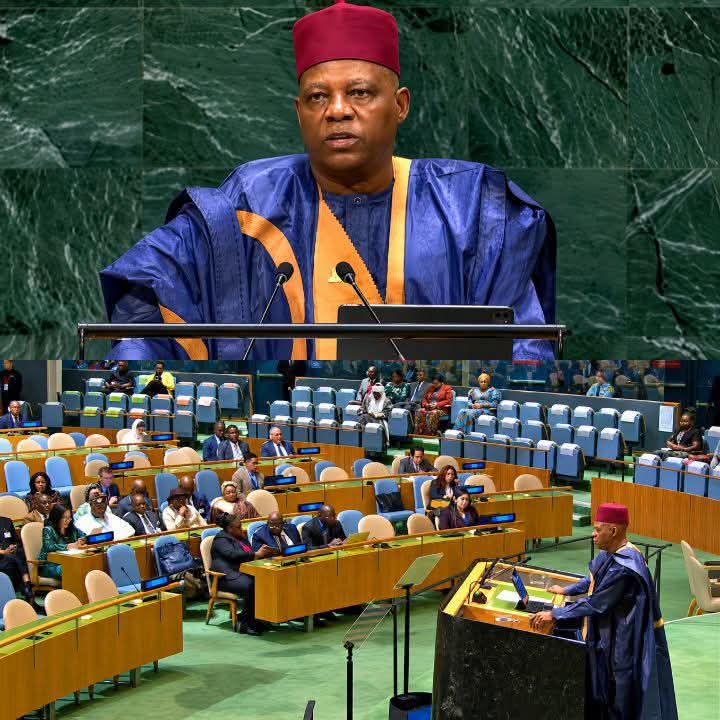
The Foundation for Peace Professionals (PeacePro) has called on African leaders attending the United Nations General Assembly to move beyond speeches and appeals and begin backing African positions with concrete diplomatic, economic, legal and security action.
In a statement authorised by its Executive Director, Abdulrazaq Hamzat, PeacePro said Africa has spent decades articulating concerns about international law, sovereignty, foreign interference, global inequality, conflicts and reform of the international system, but has too often failed to match those positions with the capacity required to make them consequential.
“Africa does not have a shortage of speeches. Africa has a shortage of power behind its speeches,” Hamzat said.
He urged African leaders to approach the United Nations as representatives of sovereign states with clearly defined interests and the capacity to defend those interests.
“A sovereign position must have sovereign capacity behind it. African leaders should not approach the international system as petitioners seeking permission to defend Africa’s legitimate interests,” he said.
Similarly, demands for respect for African sovereignty must be accompanied by stronger African security, intelligence, economic and institutional capacity.
“Every major African declaration should answer a simple question What are we prepared to do if our position is ignored?” Hamzat asked.
PeacePro stressed that its position is not a call for confrontation with other parts of the world or for Africa to isolate itself from the international community.
Rather, it is a call for strategic equality.
“Africa should cooperate with the United States, China, Russia, Europe, India and every other global power where such cooperation advances African interests. But meaningful partnership requires the capacity to negotiate, not merely the obligation to comply,” Hamzat said.
PeacePro called for a new approach to African diplomacy that it described as “Speech to Action Diplomacy.”
Under this approach, major positions announced by African leaders at the UN should be followed by measurable actions at national, regional or continental levels.
If Africa defends international law, PeacePro said, it should strengthen African legal and diplomatic mechanisms capable of defending it.
If Africa opposes foreign interference, it should develop the intelligence, institutional and economic resilience required to resist it.
If Africa demands economic sovereignty, it must invest in financial institutions, industrialisation, energy security, technology and intra-African trade.
If Africa calls for peace and security, it must develop the financial, logistical and military capabilities necessary to sustain African led peace operations.
And if Africa demands greater influence in global governance, it must build the economic and diplomatic leverage necessary to make that influence meaningful.
PeacePro said Africa’s own Agenda 2063 provides a strategic vision of a continent that is united, resilient and influential in global affairs. The challenge, it said, is translating that vision into institutional capacity and measurable action.
He called on African governments to deliberately build the capabilities that determine strategic autonomy, including energy, food, finance, technology, industry, defence, maritime security, transportation, education, intelligence and institutional governance.
“Africa should not merely tell the world what it wants. Africa must build the capacity to make its choices consequential,” Hamzat said.
He added that “The era of speeches without strategy, declarations without implementation and demands without enforcement must give way to an era of African capacity, African coordination and African strategic action.”
PeacePro said the true measure of African sovereignty would not be the applause received after an African president delivers a powerful speech at the United Nations.
“It will be what Africa is capable of doing after the speech is over.
About Author