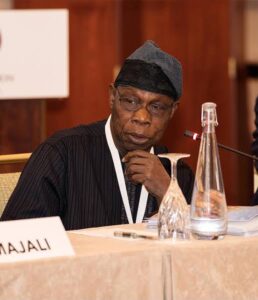
OBASANJO AND THE PERFORMANCE DEMOCRACY REVOLUTION’ BY BOLAJI AKINYEMI
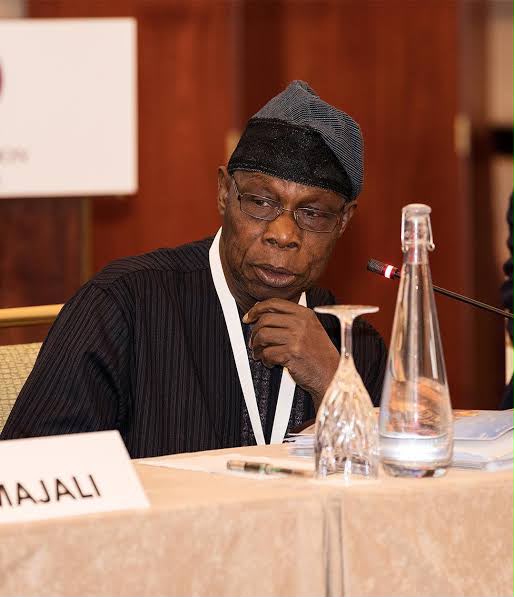
Born on 5 August 1966, I was nine years old in 1976 when Chief Olusegun Obasanjo became Nigeria’s Military Head of State. He left office in 1979, the very year I began my sojourn through secondary school.
By the time he returned to power as a democratically elected President in 1999, I was already a husband with a young family to cater for. In many ways, therefore, Obasanjo has been a constant presence across the defining seasons of my generation. For anyone my age who has lived through Nigeria’s political journey, it is difficult to speak about our national experience without encountering the imprint of Obasanjo.
I have a book in the pipeline on this subject. May God preserve Baba for many more years, and give me the grace to fulfil the promise I have made.
The Yoruba have a saying:
«“Eniyan o niyi l’aye; ti a ba ku tan, ni a di ere.”»
A person may not fully appreciate the honour attached to their name while they are alive; when they are gone, they may become a statue—a monument to memory and legacy.
Perhaps, in that sense, the Immortal Obasanjo is fittingly becoming part of the enduring political legacy of this very rare son of Africa.
Any serious assessment of Chief Olusegun Obasanjo must acknowledge the contradictions of his long public life. Yet, viewed through the emerging lens of Performance Democracy, his journey offers important lessons about leadership, reform, democratic accountability and the limitations of measuring democracy principally by elections.
As Military Head of State from 1976 to 1979, Obasanjo inherited and consolidated the assertive Pan-African foreign policy of the late General Murtala Mohammed. Nigeria became a major force in the liberation of Southern Africa, supporting struggles in Angola, Zimbabwe and Namibia and opposing apartheid South Africa. Nigeria supported liberation movements, including the ANC and SWAPO, hosted the 1977 World Conference for Action Against Apartheid, and deployed its diplomatic and economic influence against minority rule.
More significantly for the present argument, Obasanjo voluntarily returned Nigeria to civilian rule in 1979 rather than seeking to perpetuate military power. Twenty years later, he returned to power as a democratically elected President in 1999, following sixteen years of military rule.
Yet the elections that brought him to power were themselves seriously flawed, demonstrating from the beginning the weaknesses of Nigeria’s electoral democracy.
His civilian presidency nevertheless pursued substantial institutional, economic and social reforms. These included the establishment of the ICPC and EFCC, Universal Basic Education, the Niger Delta Development Commission, telecommunications reform, privatisation, fiscal reforms and the successful negotiation of substantial external debt relief.
These initiatives reflected an important principle:
Government must do more than occupy office; it must produce tangible outcomes for citizens.
On electoral reform, however, Obasanjo’s record remains deeply contradictory. His administration introduced electoral legislation and made efforts to strengthen the electoral framework, but the 2003 and, particularly, the 2007 elections were heavily criticised for manipulation and irregularities. His attempt to secure a third-term constitutional amendment further complicated his democratic legacy.
The 2007 transition exposed the central weakness of what we now describe as Campaign Democracy: political succession could occur through an electoral process without providing citizens with a credible mechanism for measuring the integrity of the mandate itself.
President Umaru Musa Yar’Adua, the beneficiary of that controversial transition, acknowledged that the election that brought him to power was not perfect and contained serious “lapses and shortcomings.” He subsequently established the Electoral Reform Committee chaired by Justice Muhammadu Uwais, signalling an intention to fundamentally reform Nigeria’s electoral system.
Sadly, Yar’Adua did not live long enough to complete that mission.
That unfinished journey brings us to the question confronting democracy today.
THE MOMENT HAS COME
There comes a moment in the life of a people when the question is no longer whether a system is called democracy, but whether that system is actually delivering the purposes for which democracy exists.
Africa may well have reached that moment.
Democracy is one of the most widely embraced political ideas in the modern world. It promises participation, representation, accountability and government by consent.
Yet, throughout much of Africa and the developing world, our experience has exposed a fundamental contradiction: we have become increasingly proficient at conducting elections without becoming equally proficient at delivering the dividends of government.
This is the crisis that demands a new conversation.
And remarkably, former Nigerian President Chief Olusegun Obasanjo has now placed his considerable voice behind precisely this interrogation.
Speaking at the 2026 Goodluck Jonathan Foundation Democracy Dialogue in Bauchi, Obasanjo questioned the suitability of the Western liberal democratic model inherited by Africa. He argued that Africa must examine its own history, culture, values and circumstances and develop a democratic system capable of serving its own purposes. He stressed that democracy must deliver welfare, equity, belonging, protection of life and property, and an improved quality of life.
That intervention deserves more than another news cycle.
It deserves a global policy conversation.
THE PROBLEM IS NOT DEMOCRACY — IT IS THE METRIC
Perhaps the greatest mistake in Africa’s democratic experience has been to assume that the principal evidence of democracy is the election.
We measure democracy by how successfully votes are cast, counted and translated into political office. We celebrate peaceful transitions. We debate electoral integrity, political parties, candidates, tribunals and mandates.
All of these matter.
But they answer essentially one question:
Who won political power?
They do not sufficiently answer the question that matters most to the ordinary citizen:
What did that power accomplish with the mandate?
This is where the concept of Performance Democracy becomes transformative.
Performance Democracy does not abolish elections. It does not diminish constitutionalism, human rights, political competition or popular participation. Rather, it introduces a more consequential measurement into democratic governance:
«The legitimacy of government must ultimately be tested by measurable performance against the needs, promises and expectations of the people.»
This represents a necessary movement from Campaign Democracy to Performance Democracy.
Campaign Democracy asks politicians to persuade citizens before an election.
Performance Democracy asks government to persuade citizens through results after the election.
Campaign Democracy is promise-centred.
Performance Democracy is outcome-centred.
Campaign Democracy culminates at the ballot box.
Performance Democracy begins there.
AFRICA NEEDS A DEMOCRACY IT CAN MEASURE
The genius of establishing a global standard is that it changes the argument.
Instead of asking whether African countries are sufficiently “democratic” simply because they hold elections every four years, the world can begin asking measurable questions:
– How many jobs were created?
– How did citizens’ purchasing power change?
– Did access to healthcare improve?
– Did children receive better education?
– Did insecurity decline?
– Did infrastructure improve?
– Did public institutions become more accessible?
– Did corruption diminish?
– Did citizens experience greater dignity and inclusion?
– Did government fulfil its published commitments?
These questions do not belong to one political party, ideology or continent.
They belong to humanity.
A Global Performance Democracy Standard could therefore establish common indicators while allowing each nation to determine its priorities according to its history, resources, culture and development realities.
This is not another attempt to create a Western template for Africa.
It is precisely the opposite.
It is an invitation to create a globally understandable measurement framework that can be locally adapted.
That distinction is crucial.
THE OBASANJO CHALLENGE AND THE PERFORMANCE DEMOCRACY OPPORTUNITY
Obasanjo’s intervention is significant because it comes from a statesman who has occupied the highest political office in Nigeria and participated directly in the evolution of African governance.
In 2023, he similarly argued that Western liberal democracy had not adequately taken African circumstances into account and called for an African approach rooted in the continent’s culture, values and traditions.
In 2026, he returned to the question with renewed urgency, asking whether the inherited model has actually delivered and urging Africans to think beyond inherited assumptions.
This is where Performance Democracy offers an important bridge.
We need not choose between “Western democracy” and “African democracy” as though humanity must remain trapped within competing political labels.
We can ask a more practical question:
What should every functioning democracy be required to deliver to the people?
That question can unite rather than divide.
FROM DEMOCRACY AS AN EVENT TO DEMOCRACY AS A CONTRACT
The election should be understood as the beginning of a democratic contract, not the completion of one.
A citizen does not eat an election result.
A child does not attend a polling booth in place of a school.
A hospital cannot be replaced by a campaign promise.
Security cannot be delivered through political rhetoric.
Roads, electricity, water, jobs, justice, education and human dignity require performance.
This means citizens must evolve from being merely voters into becoming measurers of government performance.
Governments, likewise, must evolve from periodic campaign machines into continuous delivery institutions.
Political parties should publish measurable commitments.
Governments should publish performance dashboards.
Citizens should have access to the data.
Independent institutions should verify the results.
And at regular intervals, citizens should be able to assess whether government has fulfilled the contract upon which it sought their mandate.
That is the essence of Performance Democracy.
WHY A GLOBAL STANDARD MATTERS
This is where the idea moves beyond Nigeria.
Once a credible Global Standard for Performance Democracy exists, reform becomes easier.
A Nigerian governor can be measured against it.
A Ghanaian president can be measured against it.
A Kenyan government can be measured against it.
A developing democracy anywhere in Asia, Latin America or the Pacific can adapt it.
Even established democracies can submit themselves to it.
The standard would not tell every country what to become. It would provide a common language for asking whether government is delivering peace, prosperity, justice, inclusion, opportunity and human dignity.
That is the power of measurement.
What is measured can be compared.
What is compared can be evaluated.
What is evaluated can be improved.
And what is continuously improved can transform society.
THE LAGOS OPPORTUNITY
Nigeria now has an opportunity to contribute to this global conversation.
The Lagos Declaration on Performance Democracy, emerging from the Nigerian civic experience, can become part of a much larger international conversation:
How do we move democracy from periodic electoral competition to continuous democratic performance?
Africa should not merely complain that an inherited model does not fit.
Africa should design, test, measure and demonstrate a better approach.
And if the approach works in Africa, it need not remain African.
It can become a contribution to the evolution of democracy itself.
Perhaps this is the deeper significance of Obasanjo’s challenge.
He has asked Africa to rethink the model.
Performance Democracy offers Africa the opportunity to rethink the metric.
The future of democracy may therefore not depend simply on how many people vote, but on whether the institutions created by their votes actually improve their lives.
The world does not need less democracy.
It needs democracy that performs.
And Africa may be uniquely positioned to help the world discover what that means.
From Campaign Democracy to Performance Democracy.
The ballot gives government a mandate.
Performance gives democracy meaning.
About Author