TINUBU TELLS APC GOVERNORS TO CONTROL PRIMARIES, REJECTS AUTOMATIC TICKETS AS 2027 RACE BEGINS TO TAKE SHAPE
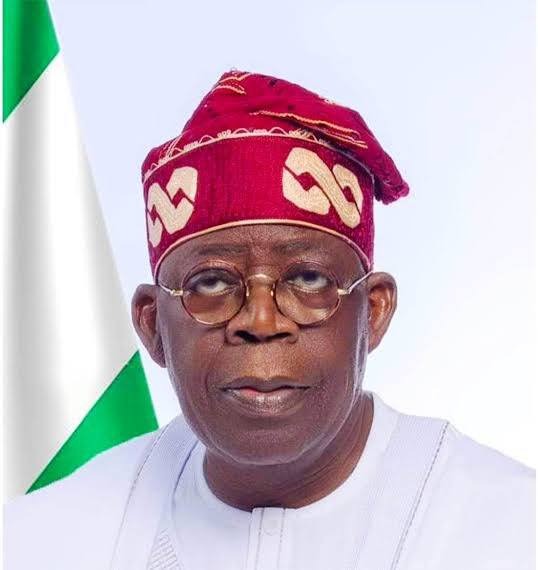
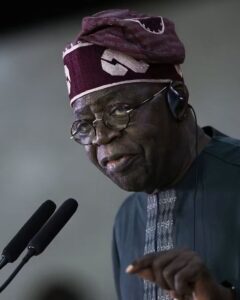
By Olayiwiola Ibrahim // President Bola Tinubu has reportedly set the tone for the All Progressives Congress (APC) ahead of the 2027 general elections, telling the party’s 32 governors that there will be no automatic tickets or presidential imposition of candidates, in what is shaping up to be a defining moment in the party’s internal power structure.
According to multiple accounts of a closed-door meeting held on Thursday evening, April 23, 2026, the President emphasized that candidate selection for elective offices must strictly follow the provisions of the Electoral Act, allowing either consensus arrangements where genuinely achieved or direct primaries in cases of unresolved disputes.
While official statements from the presidency have remained restrained, political insiders describe the meeting as both strategic and cautionary, offering governors significant latitude in managing party affairs within their states, but warning against imposition, internal sabotage, or actions capable of fracturing the ruling party ahead of a high-stakes election cycle.
Tinubu reportedly reaffirmed the central role of governors in shaping the party’s internal processes at the state level, effectively decentralizing much of the APC’s primary election management.
However, this autonomy was said to come with a clear expectation of discipline. Governors were urged to ensure that all primaries whether by consensus or ballot are conducted in a manner that is free, fair, and devoid of rancour.
In practical terms, the message appears to strike a balance, empower state actors to manage local political realities, but retain enough central authority to intervene if disputes spiral into crisis.
One of the most politically sensitive issues addressed in the meeting reportedly concerned the ambitions of outgoing governors seeking to transition into the Senate.
Contrary to earlier speculation of preferential arrangements, Tinubu is said to have taken a pragmatic position, no automatic tickets would be granted.
While acknowledging that outgoing governors retain constitutional rights to contest any office, he reportedly insisted that they must do so through open competition, without circumventing party processes or structures.
The stance effectively shuts down expectations of guaranteed political landing spots and signals a broader push toward internal contestation, even among the party’s elite.
Analysts note that Tinubu’s emphasis on direct primaries in cases of unresolved disputes may function as a subtle enforcement mechanism.
By making it clear that the centre can default to direct elections where consensus fails, the presidency effectively introduces a deterrent against excessive control by state governors, while simultaneously encouraging negotiated settlements within party structures.
The approach reflects a familiar political balancing act: reduce central interference in local contests while retaining the ability to reset the process if it becomes destabilized.
The APC has already adjusted its internal timetable for the 2027 election cycle, compressing the nomination process into a narrow window.
– House of Representatives primaries: around May 15, 2026
– Senate primaries: around May 18, 2026
– Governorship primaries: May 20–21, 2026
– Presidential primary: May 23, 2026
The schedule leaves little room for prolonged negotiations, increasing the likelihood of intense last-minute bargaining across states.
Early political dynamics suggest uneven responses across the country.
In the South-West, Tinubu’s political base, backchannel negotiations are already underway to manage potential clashes, particularly in states such as Ogun, where factional interests are seeking compromise to avoid divisive primaries.
In the North, however, reports indicate growing unease among some senators and political actors who fear that stronger gubernatorial control may come at the expense of legislative interests and established power balances.
In states like Yobe, party unity appears more stable, with emerging consensus arrangements between governors and influential senators being viewed internally as a workable model.
Elsewhere, particularly in parts of the North-East such as Gombe, local political tensions are being shaped less by presidential directives and more by longstanding rivalries, zoning disputes, and intra-party negotiations over succession and representation.
While some interpretations frame the President’s position as a decentralization of authority, others see it as a carefully managed redistribution of political risk.
By allowing governors to take ownership of the primary process, the presidency distances itself from inevitable intra-party conflicts.
Yet by retaining the power to intervene through party mechanisms or enforce direct primaries, it preserves a final layer of control.
In effect, the APC appears to be entering the 2027 cycle with a dual structure: local autonomy in contest management, and central oversight as a corrective force.
The coming weeks are expected to test the durability of this arrangement. Whether states can genuinely produce consensus candidates, or descend into competitive, litigation-heavy primaries will likely determine not only the stability of the APC but also the tone of Nigeria’s broader 2027 political landscape.
For now, the message from the presidency is clear: there will be no shortcuts, no guaranteed tickets, and no exceptions, only political competition, managed within the rules of the party and the law.
About Author