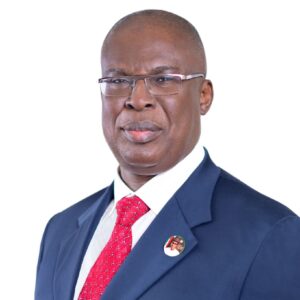
UniAbuja Under Fawehinmi: Seven Months of Renewed Scholarship, Student-Centred Leadership and Academic Visibility’ By Adagher Tersoo
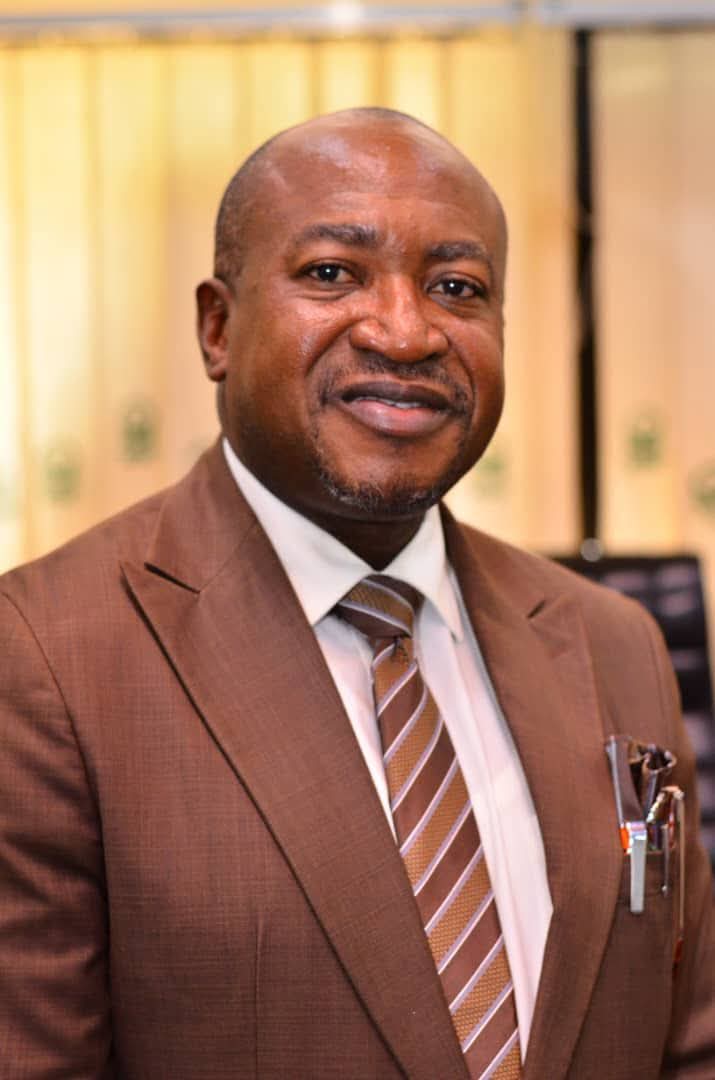
Seven months into the administration of Professor Hakeem Babatunde Fawehinmi as Vice-Chancellor of the University of Abuja, now officially known as Yakubu Gowon University, the institution is witnessing what appears to be a deliberate effort to deepen academic excellence, strengthen student engagement and reposition the university for greater national and international visibility. Since assuming office on February 10, 2026, for a five-year, non-renewable tenure, Fawehinmi has pursued an agenda anchored on scholarship, research, innovation, partnerships, infrastructure development and a more student-centred university experience. His vision, articulated at the outset of his administration, is to build an institution capable of attracting new opportunities and resources while expanding access to quality education. “The University will, under my leadership, actively explore opportunities to collaborate and secure more funding to strengthen the University, expand our academic and executive programmes as well as widen access to education within the Federal Capital Territory and beyond,” he stated.
One of the clearest manifestations of this agenda has been the renewed visibility of scholarship through the university’s inaugural lecture series. These lectures have continued to provide senior academics with a distinguished platform to present cutting-edge research while connecting scholarship to pressing national and global challenges. The 51st Inaugural Lecture, delivered by Professor Bashir Omolaran Bello on June 25, examined “Plant Breeding for Climate Resilience and Food Security: From Genes to Sustainable Food System,” highlighting the intersection between agricultural science, climate change and food security. The 52nd, delivered by Professor Uwakwe Abugu, Dean of the Faculty of Law, addressed “Restoring the Dignity of the Patient,” bringing questions of healthcare ethics, emergency treatment and patients’ rights into academic and public discourse. The 53rd lecture, delivered by Professor Daniel Omatsola on August 27, focused on “Screenology Semiotics and the Dynamics of Technoaesthetics Communication in Nigerian Screen Industry.” Collectively, the lectures reflect the intellectual diversity of the institution and its determination to keep scholarship relevant to society.
Beyond academic discourse, the Fawehinmi administration appears increasingly deliberate about placing students at the centre of institutional development. At the 2025/2026 matriculation ceremony, more than 8,000 students gained admission from over 30,000 applicants, with the Vice-Chancellor urging them to embrace discipline, academic excellence and responsible citizenship. At the combined 29th and 30th convocation, 12,624 undergraduate students were listed for graduation, including 77 First Class graduates. Particularly noteworthy was the university’s decision to provide automatic employment for its overall best graduating students—an initiative that sends a powerful message about the value attached to excellence. Alongside this, the administration has continued to promote postgraduate and executive education while creating opportunities for students to participate in entrepreneurship, leadership development and other programmes designed to prepare them for life beyond the classroom.
Perhaps more significant is the emerging effort to transform student knowledge into practical economic and social value. Through an entrepreneurship development initiative, 10 pioneer students were selected for mentorship, enterprise development and practical business opportunities. The underlying philosophy is that the contemporary university must do more than produce graduates; it must equip young people with the capacity to create solutions, businesses and opportunities. This approach is reinforced by investment in undergraduate research. More than ₦3.2 million in project-based food-security research grants was awarded to 25 final-year Agriculture students to support studies covering food security, agricultural supply chains, climate resilience, post-harvest losses and sustainable food systems. Such interventions provide students with opportunities to move from theoretical learning to practical research, while simultaneously positioning the university as a contributor to solutions to some of Nigeria’s most pressing development challenges.
The growing profile of UniAbuja students on the international stage provides another indication of the administration’s emphasis on excellence and visibility.
The victory of 500-level Law student Amra Onize Salihu at the 9th GIABA Inter-University Speech Contest in Freetown, Sierra Leone, was particularly significant. After emerging winner of Nigeria’s national selection organised by the Nigerian Financial Intelligence Unit, Salihu went on to defeat contestants from The Gambia, Liberia, Sierra Leone and Ghana to become the regional champion, winning a plaque, certificate of honour and a US$1,000 prize. Her success was supported by the University of Abuja Law Clinic under Dr Nasiru Mukhtar, with technical coaching from the NFIU. Reacting to the achievement, Fawehinmi said: “Our students from the Faculty of Law have once again made the University proud. I congratulate them on this great achievement. I also commend the Faculty of Law and the Law Clinic for their efforts in the training and mentorship of the students.” He further pledged that the university would “continue to work even harder to enhance the University’s global visibility through academic excellence and outstanding achievements such as this.”
Institutional development has equally featured prominently in the university’s emerging seven-month story.
The institution secured ₦4 billion under the Federal Ministry of Education/TETFund-supported Sustainable Health Infrastructure Programme for the expansion of its health sciences facilities. Fawehinmi described the development as a “significant achievement”, noting that the funding would strengthen teaching, research and professional training. The university has also pursued international academic partnerships, including engagements with Bashkir State Medical University in Russia, as part of efforts to broaden opportunities in medical education and research. These initiatives are important because sustainable university development increasingly depends not only on government funding but also on strategic partnerships, research collaborations and the ability to attract investment into academic infrastructure and innovation.
Seven months may be a relatively short period in the life of a university, particularly within a five-year tenure, but the emerging direction of the Fawehinmi administration is increasingly discernible. The emphasis on inaugural lectures demonstrates a commitment to scholarship; the focus on entrepreneurship and research grants reflects an effort to make learning practical; the recognition and support of exceptional students reinforce a culture of excellence; while infrastructure funding and international partnerships point towards a broader institutional repositioning.
Most importantly, achievements such as Amra Salihu’s GIABA victory demonstrate that the university’s students are capable of competing beyond Nigeria when provided with the right academic environment and mentorship. The task ahead is to sustain this momentum and translate individual successes into enduring institutional systems.
For Fawehinmi, the first seven months appear to have established the foundation for a university where scholarship is more visible, students are more empowered and academic excellence is increasingly connected to national development.
The coming years will ultimately determine how deeply these early initiatives become embedded in the institution’s culture and legacy.
Seven months into the journey, the Fawehinmi administration is still at the beginning of what could become a defining chapter in the history of the University of Abuja.
The real measure of leadership, however, will not be the number of programmes launched or milestones recorded within a few months, but whether these initiatives mature into enduring institutions, stronger academic traditions and opportunities that outlive the tenure of their initiators.
For a university located at the heart of Nigeria’s political capital, the expectation is understandably high: it must not merely produce graduates, but ideas; not merely award degrees, but shape minds; and not merely occupy physical space, but occupy a consequential place in Nigeria’s intellectual and developmental conversation. Fawehinmi’s early months have signalled an administration conscious of that responsibility—one seeking to connect scholarship with relevance, excellence with opportunity and knowledge with national progress.
If the momentum of these first seven months can be sustained, strengthened and institutionalised, the story of Yakubu Gowon University may ultimately be told not simply as another chapter in the evolution of a federal university, but as the story of an institution that rediscovered its confidence, empowered its people and asserted its rightful place among Nigeria’s leading centres of knowledge and innovation.
Adagher Tersoo is a consummate Media Manager and Public Affairs Commentator.
About Author