MUTHARIKA’S MAKE OR BREAK NATIONAL ADDRESS
°°°°We are still struggling–Oldinary citizen
BY MICHAEL MARTIN//MALAWI
Generally, the mood is sombre. Many Malawians are frustrated. Others are angry. Some are simply tired of waiting for the economic recovery they were promised.
For a government that came into office promising “proven leadership” and identifying food, fertiliser, fuel and forex as immediate priorities the question after one year is increasingly straightforward. Has life actually become better for the ordinary Malawian?
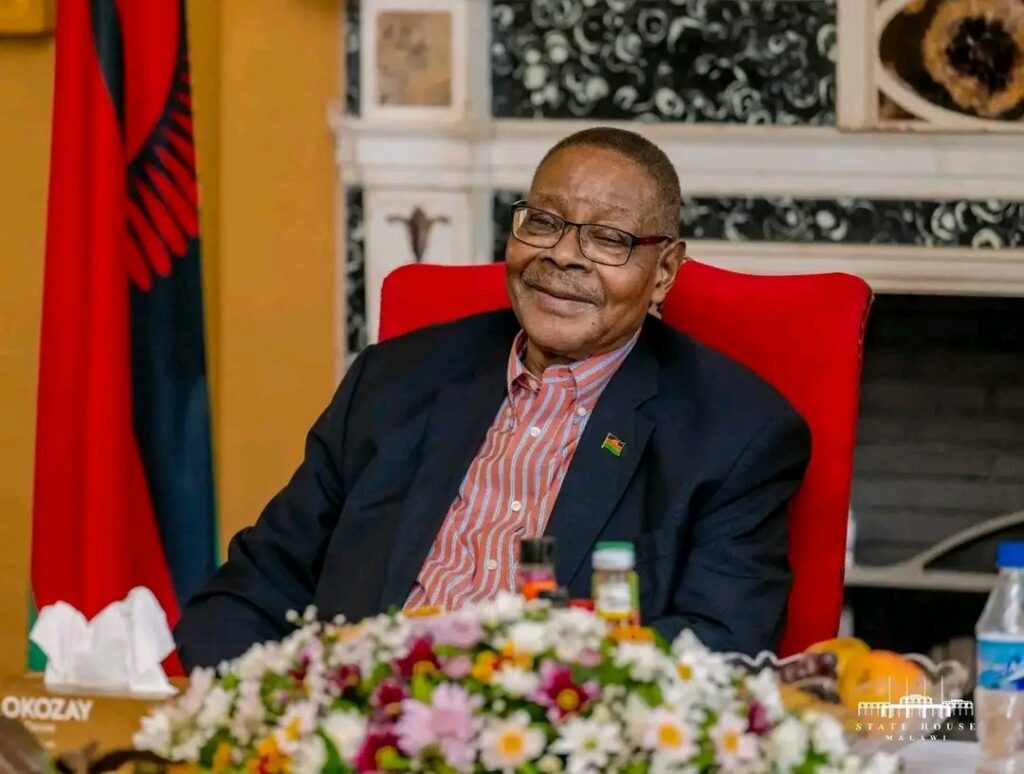
Tonight, President Peter Mutharika addresses the nation through the state broadcaster, Malawi Broadcasting Corporation as his Democratic Progressive Party administration marks one year in office.
He returns to the microphone at a particularly difficult moment.
Fuel shortages have resurfaced. Electricity supply remains unreliable. Some communities continue to experience water shortages. Businesses are struggling with the cost of operating while households are battling to stretch incomes across increasingly expensive necessities.
This makes tonight’s address more than an anniversary speech. It is a political test. It is an economic test. And, perhaps most importantly, it is a test of whether the President can reconnect with Malawians who increasingly judge the economy not through government statistics but through what they find in the market,l at the filling station and in their pockets.
At Ndirande Market in Blantyre, the economic debate is brutally simple. For traders, it is about customers who come to the market with less money. For consumers, it is about food prices. For families, it is about transport, electricity, water and school expenses.
In an interview, Pilirani Mijigo of Ndirande Township, says the economic situation remains difficult for ordinary people and wants government to do more to reduce the pressure on households.
In his remarks, Oscar Banda, a second-hand clothes trader dealing in what is locally known as kaunjika, says business cannot be separated from the wider economic crisis.
He said: “When customers have little disposable income, traders feel the pain directly.
“This is where the government’s economic report card meets reality. A government can announce that inflation has fallen.
“But the trader wants to know whether customers are buying.”
He adds that government can announce cheaper maize.
He said but the household wants to know whether it can afford relish, cooking oil, transport and electricity as well.
“And a government can announce economic stabilisation. But the businessperson wants forex and reliable power. That distinction matters,” he said.
Ruth Matemba of Ndirande Mpembu wants government to address the challenges ordinary families face in their daily lives.
Noel Chatha also brings another ordinary citizen’s perspective to the anniversary debate.
When Mutharika returned to State House, his government identified food, fertiliser, fuel and forex, alongside pharmaceuticals as immediate national priorities.
One year later, the four Fs remain at the centre of Malawi’s economic conversation.
On food, there has been a noticeable improvement.
Maize prices have fallen sharply from the levels witnessed last year, providing some relief to households. The government’s own economic programme has also credited interventions in food, fertiliser, fuel and forex with helping the economy recover from some of its worst shortages.
But cheaper maize does not automatically mean a cheaper life.
Inflation has declined, but prices remain high.
Recent reporting shows inflation falling from around 29 percent in October 2025 to about 20 percent in August 2026, while maize prices have also fallen. But petrol and diesel prices have increased dramatically, and fuel shortages have returned.
This is the contradiction confronting Mutharika tonight. The economy may be stabilising but many households do not yet feel economically secure.
Fuel may be the issue most capable of undermining the government’s economic narrative.
Queues have returned to filling stations. Diesel shortages have persisted, while petrol has also become difficult to find in some areas.
The problem is not simply about motorists. Fuel determines transport costs. Transport affects food prices. Fuel affects businesses. Fuel affects farming.cFuel affects electricity generation. And fuel shortages therefore become a national economic problem.
Recent analysis has linked fuel crisis directly to the country’s foreign-exchange problems.
So tonight, Malawians will want the President to explain where exactly is the government in solving the forex problem? And perhaps more importantly when will Malawians stop spending hours looking for fuel?
Economist Milward Tobias has offered one of the clearest warnings ahead of the anniversary.
His assessment is that Malawi has not yet reached genuine economic recovery.
That is a serious challenge to the government’s narrative.
If inflation falls but production does not significantly increase, if businesses remain constrained by forex and electricity and if incomes remain weak, then stabilisation may only be the first stage of recovery.
Recent economic analysis similarly argues that Mutharika’s government has managed to steady the economy but has not yet transformed it.
That distinction should concern State House. Because Malawians did not vote simply for stabilisation. They voted for change.
Political expert George Chaima believes tonight’s address is necessary because the President has been relatively quiet while the country has faced worsening electricity, water and fuel challenges.
He says Mutharika needs to speak directly to Malawians and reassure them that he understands the difficulties they are experiencing.
He said that may be one of the most important messages for tonight.
“People do not necessarily expect Mutharika to solve every problem in one year. But we expect him to acknowledge those problems.
We expect explanations. We expect timelines. And they expect leadership.
Chimwemwe Tsitsi, another political analyst, should similarly assess whether Mutharika’s first year represents genuine progress or merely a political recovery from the failures of the previous administration.
The distinction is important because the 2025 election was itself heavily influenced by economic dissatisfaction.
Mutharika returned to power after Malawians rejected the previous administration.
The danger for the DPP is that the same economic frustration that helped bring it back to government could eventually turn against it if citizens conclude that promises are not translating into results.
Then there is governance. A government cannot demand sacrifice from citizens while avoiding scrutiny over how public resources are being used.
Governance expert Ernest Thindwa therefore brings another important dimension to tonight’s debate.
The question is not only whether government is doing projects.
It is whether public institutions are functioning effectively, whether accountability systems are strong, whether public money is being protected and whether citizens can trust government decisions.
This is particularly important because the Nation Publications assessment gave Mutharika’s administration an overall 62.2 percent, describing its performance as satisfactory.
But the economy was the weakest area at 54.3 percent while social services scored considerably better.
In other words. The government has passed but it has not excelled. And that may be the most uncomfortable assessment for a President who returned to power promising proven leadership.
Tonight, Mutharika therefore faces several questions. Can government guarantee sustainable food security beyond one good agricultural season? Can farmers access affordable and timely inputs? When will the recurring shortages finally end? What is the long-term solution to Malawi’s chronic dollar shortage?When will households and businesses receive reliable power? What is being done about communities experiencing dry taps?Where are the productive jobs that young Malawians desperately need? When will local businesses be able to access the foreign exchange and energy they need to grow? How will government strengthen accountability and ensure that public resources are protected? How will Malawi escape the cycle of borrowing and debt servicing? When will ordinary households actually feel the benefits of economic stabilisation?
These questions are not unreasonable.They are the questions being asked in markets, minibus depots, workplaces, homes and trading centres across the country.
There is no doubt that Mutharika inherited a deeply damaged economy. The World Bank says Malawi continues to face structural economic weaknesses, foreign-exchange shortages, fuel disruptions and unreliable power, while economic growth remains below the level needed to meaningfully increase income per person.
There is also evidence that the government has made some progress. Inflation has fallen.
Maize prices have dropped. Fiscal consolidation has begun. Some social-sector reforms have been introduced. Government has increased the focus on food availability and agricultural production. These achievements should not be ignored.
But neither should the problems. Fuel queues have returned. Electricity remains unreliable.
Forex remains scarce. Businesses remain under pressure. And many ordinary Malawians remain financially squeezed. That is why the President’s second year must be different.
The first year may have been about stabilising the patient. The next four years must be about making the patient healthy.
About Author