CDEDI questions costly UK trip as public outcry grows

By Michael Martin//MALAWI
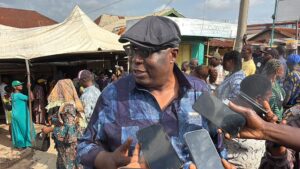
The Centre for Economic Development Initiative (CDEDI) has held a press conference to address growing public concern over the cost of an upcoming foreign trip by the Vice President of Malawi.
Speaking at the briefing, CDEDI Executive Director Sylvester Namiwa said the organisation intends to meet with the Vice President, Dr. Jane Ansah to hear her side of the story regarding the planned visit.
Namiwa explained that the meeting is aimed at understanding the justification for the trip before CDEDI makes any final conclusions or public positions.
According to CDEDI, the trip is expected to cost Malawian taxpayers close to K2 billion, a figure that has sparked widespread debate.
He noted that the amount involved is extremely high, especially at a time when Malawians are struggling with economic hardships.
Namiwa said CDEDI stands together with many Malawians who are openly expressing concern about the cost of the trip.
He emphasized that it would be unfair to pass judgment before engaging directly with Dr. Ansah to hear her explanation.
Turning to governance issues, Namiwa said it appears the ruling Democratic Progressive Party (DPP) is continuing practices left behind by the Malawi Congress Party (MCP).
He alleged that there is evidence suggesting collaboration between senior officials from the previous administration and those currently in government.
Again, Namiwa said such collaborations are enabling corrupt practices that continue to drain public resources.
He said these actions amount to “eating at the expense of Malawians” while citizens suffer.
Namiwa therefore called on political appointees tasked with assisting President Professor Peter Mutharika to reflect on their roles.
He urged them to seriously ask themselves whether they are genuinely serving Malawians in a fair and responsible manner.
On agriculture, Namiwa proposed major reforms to government policy.
He called on the government to consider scrapping the Farm Input Subsidy Programme (FISP).
According to him, the funds used for FISP should instead be invested in establishing local fertilizer manufacturing factories.
He also suggested allowing commercial farmers to grow maize on a large scale.
Namiwa said such farmers should be permitted to sell their maize directly to the government.
He argued that this approach would help curb the misuse of public funds often associated with the subsidy programme.
Addressing broader economic challenges, Namiwa said the festive season should be used to make bold policy decisions.
He highlighted the urgent need to address Malawi’s persistent shortage of foreign currency.
Namiwa stressed the importance of promoting local production to reduce dependence on imports.
He also advised the government to stop excessive spending on non-essential and expensive goods.
According to him, foreign exchange should be protected and reserved for importing productive capital goods.
Namiwa further raised concerns about the ongoing fuel shortages in the country.
He alleged that some officials are involved in corrupt practices that are disrupting fuel procurement processes.
He called on the government to take firm and decisive action against those undermining fuel supply systems.
Reiterating his stance on agriculture, Namiwa again emphasized the need to abolish FISP.
He proposed the establishment of a national fertilizer production company.
He also called for empowering ADMARC to buy crops directly from farmers to stabilize markets.
On taxation, Namiwa urged the government to think carefully about revenue collection.
He said authorities should focus on broadening the tax base rather than overburdening ordinary Malawians.
Regarding the UK trip, Namiwa confirmed that CDEDI is seeking direct dialogue with Dr. Jane Ansah.
He said the engagement is necessary given the estimated K2 billion cost of the visit.
Namiwa noted that the controversy comes at a time when Malawians are already upset about newly introduced taxes.
He praised citizens who have spoken out on the matter, saying their voices matter.
According to him, the public reaction shows that Malawians are becoming more aware and active.
He encouraged Malawians, including those in the diaspora, to continue holding leaders accountable.
Namiwa also reminded the government of its promise to crack down on corruption.
He concluded by urging authorities to use the holiday period to make tough decisions on economic reform, good governance, the rule of law, and the overall welfare of Malawians.
About Author